


A Direção Geral da Saúde revelou os dados mais recentes da pandemia no nosso país.
Nas últimas 24 horas registaram-se 5 373 novos casos de infeção. Há também a lamentar 19 vítimas mortais.

A Direção Geral da Saúde revelou os dados mais recentes da pandemia no nosso país.
Nas últimas 24 horas registaram-se 5 373 novos casos de infeção. Há também a lamentar 19 vítimas mortais.

Estão terminados os trabalhos de construção de uma nova rotunda, em plena N206, na freguesia de Vermoim, em Vila Nova de Famalicão.
A infraestrutura surgiu com o objetivo de dar uma maior fluidez ao trânsito e oferecer uma maior segurança a todos os condutores, numa zona que era identificada como bastante perigosa onde aconteciam vários acidentes, alguns deles com bastante gravidade.
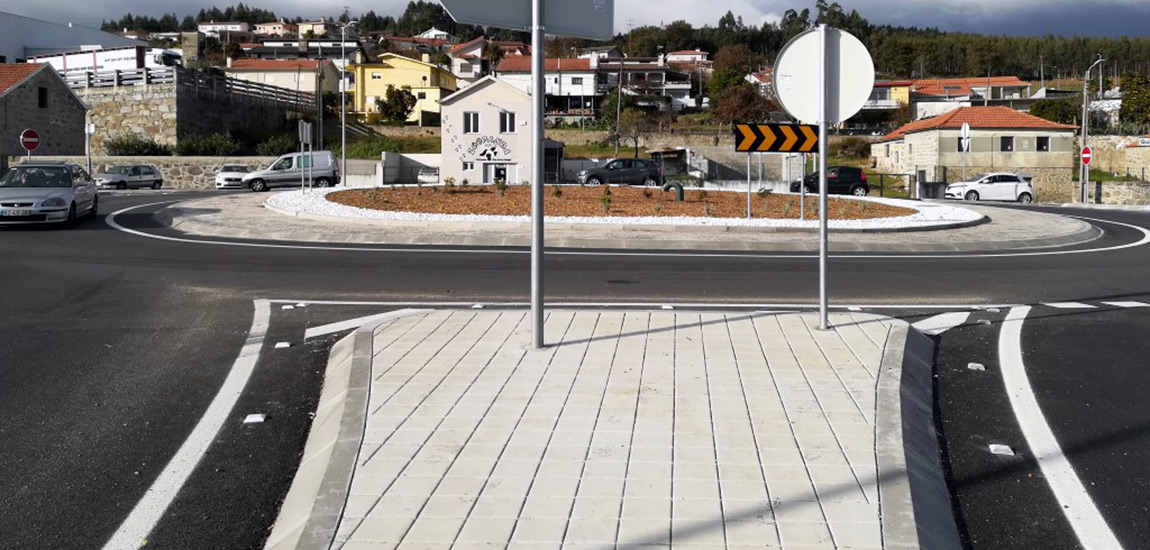
O Projeto foi elaborado pela Optimyzer, Lda. e coordenado por meios internos da Infraestruturas de Portugal, tendo a empreitada sido adjudicada à empresa Ângulo Recto Construções, Lda. pelo valor de 537.777,00€. O prazo de execução foi de 150 dias.
A via é utilizada diariamente por muitos condutores para acederem à A7.
Todos aqueles que acompanhem os menores à vacina contra a Covid-19 vão ter as faltas justificadas ao trabalho.
Segundo o Jornal de Notícias, que questionou o Ministério do Trabalho, Solidariedade e Segurança Social, “as ausências do trabalhador para assistência a filhos menores, onde se incluem as situações de vacinação, são consideradas como justificadas e como prestação efetiva de trabalho, sem perdas de quaisquer direitos, salvo quanto à retribuição, conforme previsto nos artigos 49.º e 65.º do Código do Trabalho”.
A informação surge horas após ter sido revelado o calendário de vacinação das crianças entre os 5 e os 11 anos.
As vacinas aos menores começam a ser administradas no fim de semana de 18 e 19 de dezembro.
Um homem, com cerca de 80 anos, foi colhido por um comboio, em Barroselas, Viana do Castelo
Segundo avança O Minho, a situação deu-se por volta das 10h40, em circunstâncias que estão ainda por apurar.
Para o local foram acionados os meios do socorro que já encontravam a vítima sem vida.
Esta situação poderá estar a afetar a normal circulação de comboios na Linha do Minho.
A GNR anunciou hoje a apreensão de 400 mil cigarros sem estampilha fiscal na área de serviço de Fafe, na Autoestrada 7 (A7), no distrito de Braga, e deteve o condutor de um veículo.
“No decorrer de uma ação no âmbito da atividade de prevenção e fiscalização rodoviária, os militares da Guarda detetaram os cigarros acondicionados em cerca de 20 mil maços, sem a estampilha especial fiscal exigida para a sua comercialização em território nacional”, explica a GNR, em comunicado.
Segundo esta força de segurança, a introdução no consumo dos cigarros apreendidos “teria causado um prejuízo ao Estado, em sede do Imposto Especial sobre o Consumo do Tabaco (IT) e do Imposto de Valor Acrescentado (IVA), num valor superior a 75 mil euros”.
O condutor do veículo, de 66 anos, foi detido pela prática do crime tributário de introdução fraudulenta no consumo.
O homem foi constituído arguido e os factos comunicados ao Tribunal Judicial de Braga.
A apreensão ocorreu na sexta-feira e a ação contou com o reforço do Destacamento de Trânsito de Braga e do Posto de Trânsito de Fafe.
No Hotel Sheraton do Porto, na Avenida da Boavista, as reservas para o Natal estão hoje nos 50% e para o ‘réveillon’ está entre os 60% e 75%, revelou à agência Lusa Joana Almeida, diretora daquela unidade hoteleira de luxo.
As reservas para a época natalícia estão a ser feitas cada vez mais “em cima da hora”, uma tendência que existia antes da pandemia, mas que a covid-19 veio tornar mais evidente, principalmente da parte de turistas que vêm de países com mais restrições do que Portugal, como por exemplo a Alemanha, explica Joana Sequeira.
Além das restrições nas viagens e da imposição de quarentenas por causa da covid-19, o cancelamento das festividades na cidade do Porto também não vieram ajudar o setor turístico, acrescenta.
No Hotel The Yeatman há uma “boa ocupação” para o Natal até à data e para a Passagem de Ano “apesar de ainda haver alguns quartos disponíveis, a procura mantém-se elevada e, de facto, o hotel está quase cheio”, avançou à Lusa Jan-Erik Ringertz, diretor do hotel vínico de luxo, localizado em Vila Nova de Gaia, distrito do Porto.
Segundo Jan-Erik Ringertz, as reservas estão claramente “mais elevadas” este ano em relação a 2020.
“Em 2020, a pandemia estava no auge, estávamos quase todos em ‘lockdown’ (confinamento] total, e, por isso, havia muito mais condicionantes para o setor e para a população, o que acabou por se traduzir na redução do número de reservas”, observou.
Jan-Erik Ringertz assume ter algumas “preocupações” para o futuro, designadamente o “facto de os EUA terem considerado que Portugal é um país de alto risco” e as limitações dos mercados internacionais, principalmente do primeiro trimestre.
“Depois do primeiro trimestre, acreditamos que surja uma recuperação. No entanto, ainda existem muitas hesitações e informação a ser esclarecida no que diz respeito à nova variante ómicron, pelo que, como tem sido até agora, vamos ter de nos adaptar à incerteza”, observou Jan-Erik Ringertz.
No Hotel Dom Henrique, unidade de referência na baixa do Porto, e que suspendeu a atividade em novembro de 2020 devido à falta de turistas por causa da pandemia, está com um nível de taxa de reservas para a noite de Natal na ordem dos 70% e para a noite da Passagem de Ano a rondar os 75%, conta Joaquim Simões, diretor de alojamento.
“A taxa de ocupação está simpática, mas o aumento de casos de covid-19 pode levar a cancelamentos, como aconteceu nos feriados do início do mês de dezembro em que estávamos com taxas de ocupação de 95%, mas depois houve uma taxa de cancelamentos elevada”, declarou, reconhecendo que a notícia de uma nova estirpe do vírus Sars-coV-2 e de uma quinta vaga da covid-19 pode ter causado esses cancelamentos.
Joaquim Simões refere que todos os dias se têm registado cancelamentos no Dom Henrique.
“Tudo pode mudar até ao Natal”, desabafa.
O Hotel Dom Henrique encerrou em 01 de novembro de 2020 devido à crise no setor turístico por causa da pandemia, mas este ano esse cenário não está na calha.
“Para já não tenho indicações da direção para encerrar”, avançou.
As taxa de reservas para o Hotel Moov do Porto Centro, para os dias 24 e 31 de dezembro, “são animadoras”, registando-se ao dia de hoje reservas a rondar os 20% e os 58%, respetivamente, avançou, por seu turno, Mariana Ramos, responsável de vendas e marketing dos hotéis Moov, do grupo Endutex.
“A quadra festiva é sinónimo de grande ânimo” para o setor da hotelaria e, depois da experiência do ano passado, também de oportunidade de recuperação. O ano revela-se já melhor do que 2020, mas ainda sem sentir um grande volume de procura. De um modo geral, podemos partilhar que a maioria das unidades Moov regista mais reservas nesta fase comparativamente ao que assistimos no ano passado, num cenário de pandemia, e com taxas de crescimento a rondar os 14% – 17%, e no caso do Moov Porto Centro os 49% para a Passagem de Ano”, acrescenta Mariana Ramos.
As “incertezas confirmadas pela mais recente atualização do Governo quanto às medidas de prevenção à covid-19 tiveram “impacto” no nível de reservas para as celebrações do Natal e Passagem de Ano.
“Depois do anúncio da nova estirpe ómicron, recebemos alguns pedidos para cancelamentos de reservas imediatos. Registávamos ainda níveis de reserva a quase 100% para os feriados de 1 e 8 de dezembro, mas sofremos alguma redução de ocupação”, recorda Mariana Ramos.
We and our [number_of_vendors] partners use cookies and other tracking technologies to store and access information on your device and to process your personal data.
With your consent, we and our partners may process personal data such as unique identifiers, browsing data, and precise geolocation data, including through device scanning. You can accept or reject all by clicking the buttons below, or customize your choices by clicking "Manage Settings".
Some of our partners process your data based on their legitimate interest. You have the right to object to this processing. You can manage these settings by clicking "Manage Settings" and reviewing the legitimate interest options for each purpose and vendor.
This consent applies to this website only. You can withdraw or change your consent at any time by clicking the floating "Cookie Preferences" button at the bottom-left corner of your screen.
Data Processing Purposes: Store and/or access information on a device (397 seeking consent); Use limited data to select advertising (278 seeking consent, 96 using legitimate interest); Create profiles for personalised advertising (293 seeking consent); Use profiles to select personalised advertising (299 seeking consent); Create profiles to personalise content (114 seeking consent); Use profiles to select personalised content (107 seeking consent); Measure advertising performance (301 seeking consent, 131 using legitimate interest); Measure content performance (139 seeking consent, 55 using legitimate interest); Understand audiences through statistics or combinations of data from different sources (199 seeking consent, 67 using legitimate interest); Develop and improve services (200 seeking consent, 107 using legitimate interest); Use limited data to select content (62 seeking consent, 22 using legitimate interest)
Special Features: Use precise geolocation data; Identify devices based on information actively requested
Review and customize your consent choices for purposes and vendors. You can grant or withdraw consent for each purpose and vendor individually, or use the buttons below to accept or reject all.
The choices you make regarding the purposes and entities listed in this notice are saved in your browser's localStorage and a cookie named "wpconsent_tcstring" for a maximum duration of 12 months.
These categories are not part of the IAB Transparency & Consent Framework.
Essential cookies enable basic functions and are necessary for the proper function of the website.
These purposes are part of the IAB Transparency & Consent Framework.
Cookies, device or similar online identifiers (e.g. login-based identifiers, randomly assigned identifiers, network based identifiers) together with other information (e.g. browser type and information, language, screen size, supported technologies etc.) can be stored or read on your device to recognise it each time it connects to an app or to a website, for one or several of the purposes presented here.
Examples:
Most purposes explained in this notice rely on the storage or accessing of information from your device when you use an app or visit a website. For example, a vendor or publisher might need to store a cookie on your device during your first visit on a website, to be able to recognise your device during your next visits (by accessing this cookie each time).
Advertising presented to you on this service can be based on limited data, such as the website or app you are using, your non-precise location, your device type or which content you are (or have been) interacting with (for example, to limit the number of times an ad is presented to you).
Examples:
A car manufacturer wants to promote its electric vehicles to environmentally conscious users living in the city after office hours. The advertising is presented on a page with related content (such as an article on climate change actions) after 6:30 p.m. to users whose non-precise location suggests that they are in an urban zone.
A large producer of watercolour paints wants to carry out an online advertising campaign for its latest watercolour range, diversifying its audience to reach as many amateur and professional artists as possible and avoiding showing the ad next to mismatched content (for instance, articles about how to paint your house). The number of times that the ad has been presented to you is detected and limited, to avoid presenting it too often.
Information about your activity on this service (such as forms you submit, content you look at) can be stored and combined with other information about you (for example, information from your previous activity on this service and other websites or apps) or similar users. This is then used to build or improve a profile about you (that might include possible interests and personal aspects). Your profile can be used (also later) to present advertising that appears more relevant based on your possible interests by this and other entities.
Examples:
If you read several articles about the best bike accessories to buy, this information could be used to create a profile about your interest in bike accessories. Such a profile may be used or improved later on, on the same or a different website or app to present you with advertising for a particular bike accessory brand. If you also look at a configurator for a vehicle on a luxury car manufacturer website, this information could be combined with your interest in bikes to refine your profile and make an assumption that you are interested in luxury cycling gear.
An apparel company wishes to promote its new line of high-end baby clothes. It gets in touch with an agency that has a network of clients with high income customers (such as high-end supermarkets) and asks the agency to create profiles of young parents or couples who can be assumed to be wealthy and to have a new child, so that these can later be used to present advertising within partner apps based on those profiles.
Advertising presented to you on this service can be based on your advertising profiles, which can reflect your activity on this service or other websites or apps (like the forms you submit, content you look at), possible interests and personal aspects.
Examples:
An online retailer wants to advertise a limited sale on running shoes. It wants to target advertising to users who previously looked at running shoes on its mobile app. Tracking technologies might be used to recognise that you have previously used the mobile app to consult running shoes, in order to present you with the corresponding advertisement on the app.
A profile created for personalised advertising in relation to a person having searched for bike accessories on a website can be used to present the relevant advertisement for bike accessories on a mobile app of another organisation.
Information about your activity on this service (for instance, forms you submit, non-advertising content you look at) can be stored and combined with other information about you (such as your previous activity on this service or other websites or apps) or similar users. This is then used to build or improve a profile about you (which might for example include possible interests and personal aspects). Your profile can be used (also later) to present content that appears more relevant based on your possible interests, such as by adapting the order in which content is shown to you, so that it is even easier for you to find content that matches your interests.
Examples:
You read several articles on how to build a treehouse on a social media platform. This information might be added to a profile to mark your interest in content related to outdoors as well as do-it-yourself guides (with the objective of allowing the personalisation of content, so that for example you are presented with more blog posts and articles on treehouses and wood cabins in the future).
You have viewed three videos on space exploration across different TV apps. An unrelated news platform with which you have had no contact builds a profile based on that viewing behaviour, marking space exploration as a topic of possible interest for other videos.
Content presented to you on this service can be based on your content personalisation profiles, which can reflect your activity on this or other services (for instance, the forms you submit, content you look at), possible interests and personal aspects. This can for example be used to adapt the order in which content is shown to you, so that it is even easier for you to find (non-advertising) content that matches your interests.
Examples:
You read articles on vegetarian food on a social media platform and then use the cooking app of an unrelated company. The profile built about you on the social media platform will be used to present you vegetarian recipes on the welcome screen of the cooking app.
You have viewed three videos about rowing across different websites. An unrelated video sharing platform will recommend five other videos on rowing that may be of interest to you when you use your TV app, based on a profile built about you when you visited those different websites to watch online videos.
Information regarding which advertising is presented to you and how you interact with it can be used to determine how well an advert has worked for you or other users and whether the goals of the advertising were reached. For instance, whether you saw an ad, whether you clicked on it, whether it led you to buy a product or visit a website, etc. This is very helpful to understand the relevance of advertising campaigns.
Examples:
You have clicked on an advertisement about a “black Friday” discount by an online shop on the website of a publisher and purchased a product. Your click will be linked to this purchase. Your interaction and that of other users will be measured to know how many clicks on the ad led to a purchase.
You are one of very few to have clicked on an advertisement about an “international appreciation day” discount by an online gift shop within the app of a publisher. The publisher wants to have reports to understand how often a specific ad placement within the app, and notably the “international appreciation day” ad, has been viewed or clicked by you and other users, in order to help the publisher and its partners (such as agencies) optimise ad placements.
Information regarding which content is presented to you and how you interact with it can be used to determine whether the (non-advertising) content e.g. reached its intended audience and matched your interests. For instance, whether you read an article, watch a video, listen to a podcast or look at a product description, how long you spent on this service and the web pages you visit etc. This is very helpful to understand the relevance of (non-advertising) content that is shown to you.
Examples:
You have read a blog post about hiking on a mobile app of a publisher and followed a link to a recommended and related post. Your interactions will be recorded as showing that the initial hiking post was useful to you and that it was successful in interesting you in the related post. This will be measured to know whether to produce more posts on hiking in the future and where to place them on the home screen of the mobile app.
You were presented a video on fashion trends, but you and several other users stopped watching after 30 seconds. This information is then used to evaluate the right length of future videos on fashion trends.
Reports can be generated based on the combination of data sets (like user profiles, statistics, market research, analytics data) regarding your interactions and those of other users with advertising or (non-advertising) content to identify common characteristics (for instance, to determine which target audiences are more receptive to an ad campaign or to certain contents).
Examples:
The owner of an online bookstore wants commercial reporting showing the proportion of visitors who consulted and left its site without buying, or consulted and bought the last celebrity autobiography of the month, as well as the average age and the male/female distribution of each category. Data relating to your navigation on its site and to your personal characteristics is then used and combined with other such data to produce these statistics.
An advertiser wants to better understand the type of audience interacting with its adverts. It calls upon a research institute to compare the characteristics of users who interacted with the ad with typical attributes of users of similar platforms, across different devices. This comparison reveals to the advertiser that its ad audience is mainly accessing the adverts through mobile devices and is likely in the 45-60 age range.
Information about your activity on this service, such as your interaction with ads or content, can be very helpful to improve products and services and to build new products and services based on user interactions, the type of audience, etc. This specific purpose does not include the development or improvement of user profiles and identifiers.
Examples:
A technology platform working with a social media provider notices a growth in mobile app users, and sees based on their profiles that many of them are connecting through mobile connections. It uses a new technology to deliver ads that are formatted for mobile devices and that are low-bandwidth, to improve their performance.
An advertiser is looking for a way to display ads on a new type of consumer device. It collects information regarding the way users interact with this new kind of device to determine whether it can build a new mechanism for displaying advertising on this type of device.
Content presented to you on this service can be based on limited data, such as the website or app you are using, your non-precise location, your device type, or which content you are (or have been) interacting with (for example, to limit the number of times a video or an article is presented to you).
Examples:
A travel magazine has published an article on its website about the new online courses proposed by a language school, to improve travelling experiences abroad. The school’s blog posts are inserted directly at the bottom of the page, and selected on the basis of your non-precise location (for instance, blog posts explaining the course curriculum for different languages than the language of the country you are situated in).
A sports news mobile app has started a new section of articles covering the most recent football games. Each article includes videos hosted by a separate streaming platform showcasing the highlights of each match. If you fast-forward a video, this information may be used to select a shorter video to play next.
You can find more information in our Cookie Policy and Política de Privacidade.

