A denúncia é feita pelo jornal Semanário V, que cita uma cidadã que recorreu às redes sociais para expor a situação.
A burla consiste na simulação de um atropelamento, levado a cabo por um grupo de homens que está a atuar na cidade de Braga. Estes procuram carros que estejam a sair de lugares de estacionamento. Assim que o condutor faz marcha-atrás, um dos elementos lança-se para a traseira do carro e atira um telemóvel já partido para o chão.
De seguida, o condutor é abordado pelo burlão, sendo que este reclama de imediato dinheiro para proceder à reparação do equipamento que ficou danificado na sequencia do atropelamento. Aos condutores que dizem não ter dinheiro, a suposta vítima prontifica-se a ir até a um multibanco mais próximo ou até aceita cheques.
A burla só chega a ser evitada quando surgem testemunhas que denunciam a encenação dos burlões.
Warning: A non-numeric value encountered in /home/oldwp26.cidadehoje.pt/public_html/wp-includes/media.php on line 3710
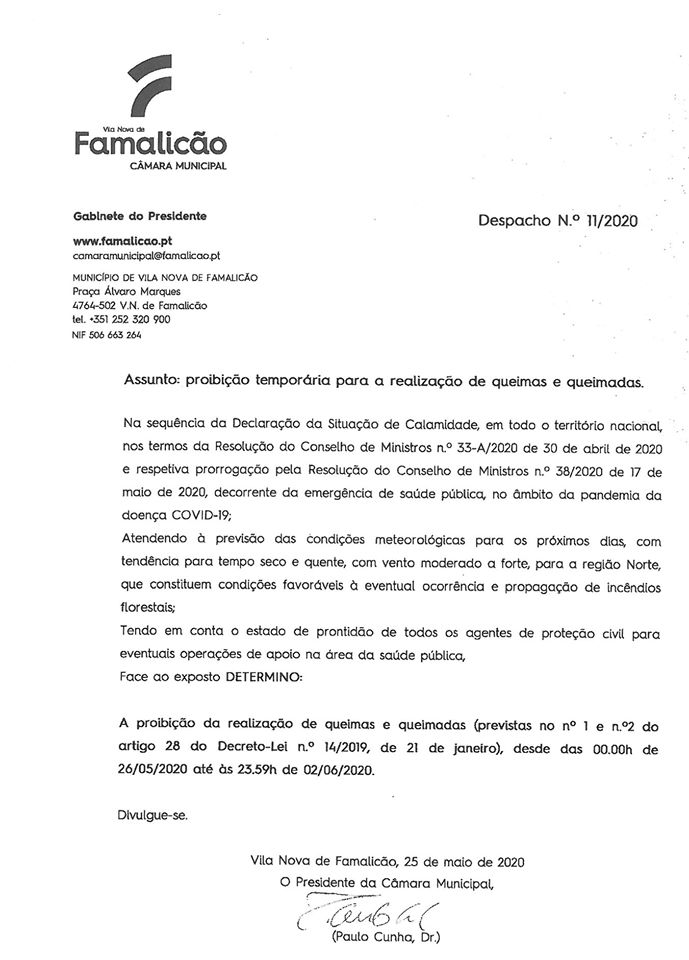
Um helicóptero esteve envolvido no combate a um incêndio que deflagrou, a meio da tarde desta segunda-feira, em Arnoso Sta Eulália, numa zona florestal nas proximidades do mosteiro.
O alerta para o fogo terá sido dado depois das 16h00, tendo sido acionados os Bombeiros Voluntários Famalicenses, Barcelinhos e Viatodos.
Devido à rápida intervenção do meio aéreo, duas das corporações acionadas acabaram por, minutos depois, serem desmobilizadas.
“Sabemos que os jogos vão ser à porta fechada e que o público não pode aceder. Aquilo que queremos e tentámos potenciar foi que a entidade governamental pudesse de alguma forma injetar dinheiro nos canais generalistas, para que pudessem adquirir conteúdos junto das operadoras. Assim, as operadoras seriam ressarcidas e poderiam pagar os clubes, fechando este ciclo”, afirmou Pedro Proença.
O dirigente máximo da Liga falava aos jornalistas, após uma reunião na Câmara Municipal do Porto com o presidente Rui Moreira.
“É também uma forma de não ter aglomerados à volta dos estádios e assim também proteger as famílias”, acrescentou o antigo árbitro.
Questionado sobre a sua continuidade à frente do organismo, com Benfica e Cova da Piedade a abandonarem recentemente a direção da Liga, Pedro Proença lembrou que o “importante agora é retomar as competições”.
“Fui reeleito há um ano com 96%. É um momento muito difícil para muitos clubes que estão em sérias dificuldades e necessitam de retomar a sua atividade profissional. Aceitamos com naturalidade as críticas, numa altura que é preciso tomar decisões difíceis. A Liga é dos clubes e o presidente da Liga estará enquanto os clubes quiserem”, frisou.
Após a declaração de pandemia, em 11 de março, as competições desportivas de quase todas as modalidades foram disputadas sem público, adiadas – Jogos Olímpicos Tóquio2020, Euro2020 e Copa América -, suspensas, nos casos dos campeonatos nacionais e provas internacionais, ou mesmo canceladas.
Os campeonatos de futebol de França e dos Países Baixos foram cancelados, enquanto outros países preparam o regresso à competição, com fortes restrições, como sucede na Alemanha, Inglaterra, Itália, Espanha e Portugal, que tem o reinício da I Liga previsto para 4 de junho.
A II Liga ficou de fora da autorização dada pelo plano de desconfinamento do Governo e da Direção-Geral da Saúde para a conclusão da I Liga e da Taça de Portugal de futebol.
A região Norte foi aquela que mais contribuiu para aumentar a produtividade laboral no país entre o ano de 2000 e 2017, ao crescer 20% acima dos 15,5% da média do país.
Estes dados foram divulgados pelo Jornal Público, esta segunda-feira, dia 25 de maio, apontando como fonte de informação a Comissão de Coordenação e Desenvolvimento Regional do Norte (CCDRN).
Normalmente são as regiões já mais desenvolvidas que mais sobem; neste caso Lisboa não passou dos 3,3% e a região Norte, que é a de menor rendimento por habitante do país, foi aquela que mais subiu. Aliás, é caso único em toda a União Europeia.
Segundo a CCDRN, o aumento da produtividade laboral a Norte «terá resultado, sobretudo, de processos de reestruturação do seu principal sector de atividade económica, as indústrias transformadoras, com um crescimento de 51,6%». Tal corresponde ao «12.º maior crescimento entre as 21 regiões europeias mais industrializadas incluídas no estudo».
Em todo o caso, o ritmo nacional de crescimento da produtividade do trabalho (média de 15,2%) foi fraco quando comparado com outros países europeus, nomeadamente da Europa de Leste, aponta a CCDRN.
Ainda segundo os dados avançados, o Norte «beneficiou de transferências moderadas de emprego em favor de atividades económicas mais dinâmicas e inovadoras, como é o caso do terciário superior (atividades de consultoria, científicas, serviços de apoio, informação, comunicação, serviços financeiros e seguros)». Nestas áreas, foram criados 64 mil novos postos de trabalho. Nos sectores mais indiferenciados (comércio, transportes, restauração e hotelaria), registou-se uma criação de 60 mil empregos.
Por outro lado, perdeu empregos em áreas como a construção, o setor primário e indústrias transformadoras.
A concelhia do Partido Socialista de Vila Nova de Famalicão acusa a Câmara Municipal de entregar máscaras não certificadas aos funcionários municipais. A vereadora da Saúde Pública nega esta acusação e garante que as primeiras não tinham selo, porque não era obrigatório, mas que, entretanto, todos receberam um segundo kit, certificado.
A acusação partiu do PS, ao afirmar que as máscaras que foram entregues aos funcionários foram oferecidas por empresas ao município antes da obrigatoriedade de utilização de máscaras, e que, desde então, ainda não terá sido possível proceder à substituição das mesmas.
Em nota à imprensa, o PS Famalicão «lamenta que a Câmara ainda não tenha corrigido o erro»; diz que está em causa a saúde dos cidadãos e que deve ser regularizada a situação, com entrega de máscaras certificadas. «Num concelho que pretendemos pró-ativo no combate à Covid-19, e que tantas vezes é apregoado pelo Presidente da Câmara, a correção destes erros ou falhas grosseiras não pode ser deixada para outro dia », afirma Eduardo Oliveira.
Há mais de 15 dias que a Câmara está a equipar os funcionários municipais com máscaras certificadas
Vereadora Sofia Fernandes
A vereadora da Saúde Pública, Sofia Fernandes, informa que «no período de emergência nacional, a Câmara Municipal adquiriu, no dia 24 de março, um conjunto de máscaras comunitárias para proteção dos seus funcionários que foram distribuídas e utilizadas nessa mesma semana. Nessa altura, não existia o conceito de máscaras não certificadas. Quando, a partir de meados de abril, o Governo definiu a obrigatoriedade de certificação deste tipo de equipamento, a Câmara teve o cuidado de adquirir e distribuir apenas máscaras certificadas pelo CITEVE».
A partir dessa data, a Câmara garante que todas as máscaras levam selo de certificação, incluindo as 130 mil que foram distribuídas aos famalicenses, através das Juntas de Freguesia.
A vereadora recorda que o processo de certificação e de produção, «teve alguma demora, o que provocou atrasos nas entregas. Em todo o caso, há mais de 15 dias que a Câmara está a equipar os funcionários municipais com máscaras certificadas».
A autarca garante que todo o material de proteção individual (máscaras, batas, viseiras, óculos, aventais) que está a ser entregue a quem está na chamada linha da frente está devidamente certificado pelas instâncias competentes.
Últimas Noticias
Concelho
Cookie Consent
We and our [number_of_vendors] partners use cookies and other tracking technologies to store and access information on your device and to process your personal data.
With your consent, we and our partners may process personal data such as unique identifiers, browsing data, and precise geolocation data, including through device scanning. You can accept or reject all by clicking the buttons below, or customize your choices by clicking "Manage Settings".
Some of our partners process your data based on their legitimate interest. You have the right to object to this processing. You can manage these settings by clicking "Manage Settings" and reviewing the legitimate interest options for each purpose and vendor.
This consent applies to this website only. You can withdraw or change your consent at any time by clicking the floating "Cookie Preferences" button at the bottom-left corner of your screen.
Data Processing Purposes: Store and/or access information on a device (397 seeking consent); Use limited data to select advertising (278 seeking consent, 96 using legitimate interest); Create profiles for personalised advertising (293 seeking consent); Use profiles to select personalised advertising (299 seeking consent); Create profiles to personalise content (114 seeking consent); Use profiles to select personalised content (107 seeking consent); Measure advertising performance (301 seeking consent, 131 using legitimate interest); Measure content performance (139 seeking consent, 55 using legitimate interest); Understand audiences through statistics or combinations of data from different sources (199 seeking consent, 67 using legitimate interest); Develop and improve services (200 seeking consent, 107 using legitimate interest); Use limited data to select content (62 seeking consent, 22 using legitimate interest)
Special Features: Use precise geolocation data; Identify devices based on information actively requested
Review and customize your consent choices for purposes and vendors. You can grant or withdraw consent for each purpose and vendor individually, or use the buttons below to accept or reject all.
The choices you make regarding the purposes and entities listed in this notice are saved in your browser's localStorage and a cookie named "wpconsent_tcstring" for a maximum duration of 12 months.
Non-IAB TCF Categories
These categories are not part of the IAB Transparency & Consent Framework.
Essential cookies enable basic functions and are necessary for the proper function of the website.
Name
Description
Duration
IAB TC String
This cookie stores the IAB Transparency & Consent Framework consent string, recording the user's choices for IAB TCF purposes and vendors.
12 months
Cookie Preferences
This cookie is used to store the user's cookie consent preferences.
30 days
IAB TCF Purposes
These purposes are part of the IAB Transparency & Consent Framework.
Store and/or access information on a device (397 seeking consent)
Cookies, device or similar online identifiers (e.g. login-based identifiers, randomly assigned identifiers, network based identifiers) together with other information (e.g. browser type and information, language, screen size, supported technologies etc.) can be stored or read on your device to recognise it each time it connects to an app or to a website, for one or several of the purposes presented here.
Examples:
Most purposes explained in this notice rely on the storage or accessing of information from your device when you use an app or visit a website. For example, a vendor or publisher might need to store a cookie on your device during your first visit on a website, to be able to recognise your device during your next visits (by accessing this cookie each time).
Use limited data to select advertising (278 seeking consent, 96 using legitimate interest)
Advertising presented to you on this service can be based on limited data, such as the website or app you are using, your non-precise location, your device type or which content you are (or have been) interacting with (for example, to limit the number of times an ad is presented to you).
Examples:
A car manufacturer wants to promote its electric vehicles to environmentally conscious users living in the city after office hours. The advertising is presented on a page with related content (such as an article on climate change actions) after 6:30 p.m. to users whose non-precise location suggests that they are in an urban zone.
A large producer of watercolour paints wants to carry out an online advertising campaign for its latest watercolour range, diversifying its audience to reach as many amateur and professional artists as possible and avoiding showing the ad next to mismatched content (for instance, articles about how to paint your house). The number of times that the ad has been presented to you is detected and limited, to avoid presenting it too often.
Create profiles for personalised advertising (293 seeking consent)
Information about your activity on this service (such as forms you submit, content you look at) can be stored and combined with other information about you (for example, information from your previous activity on this service and other websites or apps) or similar users. This is then used to build or improve a profile about you (that might include possible interests and personal aspects). Your profile can be used (also later) to present advertising that appears more relevant based on your possible interests by this and other entities.
Examples:
If you read several articles about the best bike accessories to buy, this information could be used to create a profile about your interest in bike accessories. Such a profile may be used or improved later on, on the same or a different website or app to present you with advertising for a particular bike accessory brand. If you also look at a configurator for a vehicle on a luxury car manufacturer website, this information could be combined with your interest in bikes to refine your profile and make an assumption that you are interested in luxury cycling gear.
An apparel company wishes to promote its new line of high-end baby clothes. It gets in touch with an agency that has a network of clients with high income customers (such as high-end supermarkets) and asks the agency to create profiles of young parents or couples who can be assumed to be wealthy and to have a new child, so that these can later be used to present advertising within partner apps based on those profiles.
Use profiles to select personalised advertising (299 seeking consent)
Advertising presented to you on this service can be based on your advertising profiles, which can reflect your activity on this service or other websites or apps (like the forms you submit, content you look at), possible interests and personal aspects.
Examples:
An online retailer wants to advertise a limited sale on running shoes. It wants to target advertising to users who previously looked at running shoes on its mobile app. Tracking technologies might be used to recognise that you have previously used the mobile app to consult running shoes, in order to present you with the corresponding advertisement on the app.
A profile created for personalised advertising in relation to a person having searched for bike accessories on a website can be used to present the relevant advertisement for bike accessories on a mobile app of another organisation.
Create profiles to personalise content (114 seeking consent)
Information about your activity on this service (for instance, forms you submit, non-advertising content you look at) can be stored and combined with other information about you (such as your previous activity on this service or other websites or apps) or similar users. This is then used to build or improve a profile about you (which might for example include possible interests and personal aspects). Your profile can be used (also later) to present content that appears more relevant based on your possible interests, such as by adapting the order in which content is shown to you, so that it is even easier for you to find content that matches your interests.
Examples:
You read several articles on how to build a treehouse on a social media platform. This information might be added to a profile to mark your interest in content related to outdoors as well as do-it-yourself guides (with the objective of allowing the personalisation of content, so that for example you are presented with more blog posts and articles on treehouses and wood cabins in the future).
You have viewed three videos on space exploration across different TV apps. An unrelated news platform with which you have had no contact builds a profile based on that viewing behaviour, marking space exploration as a topic of possible interest for other videos.
Use profiles to select personalised content (107 seeking consent)
Content presented to you on this service can be based on your content personalisation profiles, which can reflect your activity on this or other services (for instance, the forms you submit, content you look at), possible interests and personal aspects. This can for example be used to adapt the order in which content is shown to you, so that it is even easier for you to find (non-advertising) content that matches your interests.
Examples:
You read articles on vegetarian food on a social media platform and then use the cooking app of an unrelated company. The profile built about you on the social media platform will be used to present you vegetarian recipes on the welcome screen of the cooking app.
You have viewed three videos about rowing across different websites. An unrelated video sharing platform will recommend five other videos on rowing that may be of interest to you when you use your TV app, based on a profile built about you when you visited those different websites to watch online videos.
Measure advertising performance (301 seeking consent, 131 using legitimate interest)
Information regarding which advertising is presented to you and how you interact with it can be used to determine how well an advert has worked for you or other users and whether the goals of the advertising were reached. For instance, whether you saw an ad, whether you clicked on it, whether it led you to buy a product or visit a website, etc. This is very helpful to understand the relevance of advertising campaigns.
Examples:
You have clicked on an advertisement about a “black Friday” discount by an online shop on the website of a publisher and purchased a product. Your click will be linked to this purchase. Your interaction and that of other users will be measured to know how many clicks on the ad led to a purchase.
You are one of very few to have clicked on an advertisement about an “international appreciation day” discount by an online gift shop within the app of a publisher. The publisher wants to have reports to understand how often a specific ad placement within the app, and notably the “international appreciation day” ad, has been viewed or clicked by you and other users, in order to help the publisher and its partners (such as agencies) optimise ad placements.
Measure content performance (139 seeking consent, 55 using legitimate interest)
Information regarding which content is presented to you and how you interact with it can be used to determine whether the (non-advertising) content e.g. reached its intended audience and matched your interests. For instance, whether you read an article, watch a video, listen to a podcast or look at a product description, how long you spent on this service and the web pages you visit etc. This is very helpful to understand the relevance of (non-advertising) content that is shown to you.
Examples:
You have read a blog post about hiking on a mobile app of a publisher and followed a link to a recommended and related post. Your interactions will be recorded as showing that the initial hiking post was useful to you and that it was successful in interesting you in the related post. This will be measured to know whether to produce more posts on hiking in the future and where to place them on the home screen of the mobile app.
You were presented a video on fashion trends, but you and several other users stopped watching after 30 seconds. This information is then used to evaluate the right length of future videos on fashion trends.
Understand audiences through statistics or combinations of data from different sources (199 seeking consent, 67 using legitimate interest)
Reports can be generated based on the combination of data sets (like user profiles, statistics, market research, analytics data) regarding your interactions and those of other users with advertising or (non-advertising) content to identify common characteristics (for instance, to determine which target audiences are more receptive to an ad campaign or to certain contents).
Examples:
The owner of an online bookstore wants commercial reporting showing the proportion of visitors who consulted and left its site without buying, or consulted and bought the last celebrity autobiography of the month, as well as the average age and the male/female distribution of each category. Data relating to your navigation on its site and to your personal characteristics is then used and combined with other such data to produce these statistics.
An advertiser wants to better understand the type of audience interacting with its adverts. It calls upon a research institute to compare the characteristics of users who interacted with the ad with typical attributes of users of similar platforms, across different devices. This comparison reveals to the advertiser that its ad audience is mainly accessing the adverts through mobile devices and is likely in the 45-60 age range.
Develop and improve services (200 seeking consent, 107 using legitimate interest)
Information about your activity on this service, such as your interaction with ads or content, can be very helpful to improve products and services and to build new products and services based on user interactions, the type of audience, etc. This specific purpose does not include the development or improvement of user profiles and identifiers.
Examples:
A technology platform working with a social media provider notices a growth in mobile app users, and sees based on their profiles that many of them are connecting through mobile connections. It uses a new technology to deliver ads that are formatted for mobile devices and that are low-bandwidth, to improve their performance.
An advertiser is looking for a way to display ads on a new type of consumer device. It collects information regarding the way users interact with this new kind of device to determine whether it can build a new mechanism for displaying advertising on this type of device.
Use limited data to select content (62 seeking consent, 22 using legitimate interest)
Content presented to you on this service can be based on limited data, such as the website or app you are using, your non-precise location, your device type, or which content you are (or have been) interacting with (for example, to limit the number of times a video or an article is presented to you).
Examples:
A travel magazine has published an article on its website about the new online courses proposed by a language school, to improve travelling experiences abroad. The school’s blog posts are inserted directly at the bottom of the page, and selected on the basis of your non-precise location (for instance, blog posts explaining the course curriculum for different languages than the language of the country you are situated in).
A sports news mobile app has started a new section of articles covering the most recent football games. Each article includes videos hosted by a separate streaming platform showcasing the highlights of each match. If you fast-forward a video, this information may be used to select a shorter video to play next.