No passado fim-de-semana, o Mestre Alexandre Carvalho, presidente e fundador do estilo marcial Alex Ryu Jitsu, deslocou-se à Suíça, onde ministrou um Seminário Internacional de Defesa Pessoal de Rua, organizado pela academia Alex Ryu Jitsu de La Rippe, liderada pelo Instrutor Bruno Cardoso.
Neste evento, o Mestre Alexandre Carvalho desenvolveu técnicas de defesa pessoal de rua de mão nua e contra ataques de mão armada, com faca, pau e pistola, perante os mais de meia centena de participantes naquele seminário.
O seminário contou com a presença do Presidente do Município da cidade de La Rippe, Moccand, o qual teceu largos elogios a academia Alex Ryu Jitsu daquela cidade, reconhecendo a sua importância na formação cívica dos cidadãos que a frequentam e enaltecendo o excelente trabalho que o instrutor Bruno Cardoso tem feito em prol da comunidade e das artes marciais.
A ICCO – Indústria de Componentes e Calçado Ortopédico, Limitada, empresa de Cabo Verde fundada em 1993 pelo empresário português e ex-presidente do Município de Vila Nova de Famalicão, Armindo Costa, na ilha de São Vicente, passou a integrar a lista restrita de 139 grandes contribuintes do país, segundo revela um despacho assinado pelo ministro das Finanças, Olavo Correia, publicado recentemente no Boletim Oficial da República de Cabo Verde.
Em Cabo Verde, são considerados grandes contribuintes as entidades com um volume de negócios anual superior a 200 milhões de escudos cabo-verdianos (o equivalente a 1,8 milhões de euros) e entidades com um valor global de impostos pagos superior a 15 milhões de escudos cabo-verdianos (136 mil euros). A informação pública sobre os 139 grandes contribuintes é apresentada por ordem alfabética, não sendo revelados os valores do volume de negócios ou dos impostos pagos.
Estes critérios de seleção estão definidos na Portaria nº 55/2013, de 5 de novembro, do Ministério das Finanças e do Planeamento de Cabo Verde, documento que regula a criação da Repartição Especial dos Grandes Contribuintes.
NOVOS INVESTIMENTOS
“Em 1993, fomos ajudados pelo Governo de Cabo Verde, com estímulos ao investimento, decorrentes do facto de termos sido uma das primeiras empresas francas de capital estrangeiro a instalar-se no país. Passados 25 anos, estamos a retribuir, gerando riqueza para a sociedade cabo-verdiana”, afirma Armindo Costa, fundador e administrador da ICCO.
Em sua opinião, integrar o grupo dos grandes contribuintes de Cabo Verde é motivo “de orgulho, como investidor e empresário, pela boa gestão dos recursos, mas também motivo de responsabilidade perante a comunidade de S. Vicente e de Cabo Verde”.
“Estamos felizes em Cabo Verde e vamos continuar por muitos e bons anos. Cabo Verde é o país mais europeu de África, tem uma moeda estável, sendo talvez o país africano que mais se identifica com Portugal”, adiantou o presidente do grupo ACO Shoes, revelando que tem na forja o desenvolvimento de um projeto de crescimento industrial em Cabo Verde, onde atualmente laboram 250 funcionários.
“O nosso projeto de crescimento em Cabo Verde, que a seu tempo revelaremos, é o nosso compromisso com o país. Cabo Verde é bom para investir, dispondo de uma localização estratégica que foi importante no passado e continuará a ser importante no futuro”, considera Armindo Costa.
CABO VERDE PRODUZ COMPONENTES
A empresa que Armindo Costa fundou em Cabo Verde há 25 anos é participada em 98% pela portuguesa ACO – Fábrica de Calçado SA, com sede em Vila Nova de Famalicão, no Norte do país, da qual o empresário é fundador e presidente.
A fábrica cabo-verdiana começou a laborar em 1993, depois de os seus trabalhadores recrutados em Cabo Verde, a maioria do sexo feminino, terem recebido formação profissional na fábrica-mãe, em Portugal.
Na ICCO, são produzidos componentes para calçado de conforto, que correspondem a 55 por cento do processo produtivo. O transporte para Portugal – onde a produção é finalizada –, é feito por via aérea, o que garante o cumprimento dos prazos de entrega nos mercados internacionais.
Fundado em 1975, o grupo ACO Shoes emprega um total de 810 pessoas em três fábricas: 400 na empresa-mãe, em Vila Nova de Famalicão; 160 na ECCO Conforto, em Ponte de Lima; e 250 na ICCO, em Cabo Verde.
Anualmente, o grupo ACO, que é líder nas exportações portuguesas de calçado de conforto, produz 1,5 milhões de pares de sapatos, gerando um volume de negócios na ordem dos 35 milhões de euros.
Com marcas próprias e também em regime de “private label”, o calçado da ACO é vendido em 37 países de cinco continentes (Europa, Ásia, África, Oceania e América). Assim, os sapatos produzidos em Vila Nova de Famalicão podem ser encontrados na África do Sul, Alemanha, Arábia Saudita, Áustria, Austrália, Bélgica, Bielorrússia, Canadá, Dinamarca, Emiratos Árabes Unidos, Eslováquia, Eslovénia, Espanha, Estados Unidos da América, Estónia, Finlândia, França, Grécia, Holanda, Hungria, Inglaterra, Irlanda, Israel, Japão, Letónia, Lituânia, Noruega, Polónia, Portugal, Quirguistão, República Checa, Roménia, Rússia, Suécia, Suíça, Turquia e Ucrânia.
“Como motivar para o sucesso escolar” é o tema de uma palestra destinada a pais, encarregados de educação e professores que se realiza na próxima sexta-feira, 27 de abril, às 21h00, na Casa das Artes de Vila Nova de Famalicão.
O orador da palestra é Nelson Ramos, professor, coach e consultor da academia I Have The Power.
O evento é organizado pelo Centro de Estudo Smart Kids, de Vila Nova de Famalicão, e conta com o apoio do projeto municipal Famalicão Made In.
Ângela Ribeiro, diretora do Centro de Estudo Smart Kids, explica que “nesta altura do ano letivo é importante que os encarregados de educação façam uma análise ao desempenho global dos alunos, para verificar quais são as disciplinas em que o aluno tem mais dificuldade e ajudá-lo a obter melhores resultados”.
A organizadora do evento salienta que “muitos alunos precisam de aprender a estudar” e que a realização da palestra com Nelson Ramos, um especialista em educação e alto desempenho, “faz parte do compromisso transversal que o Centro de Estudo Smart Kids tem com a comunidade escolar, ou seja, com alunos e encarregados de educação”.
A palestra destina-se a pais, encarregados de educação, professores e toda a comunidade educativa. O evento é gratuito e para participar é necessário fazer inscrição prévia junto ao Centro de Estudo Smart Kids, através do telefone 252 321 454, do email geral@smartkids.com.ptou da página do centro de estudo no Facebook www.facebook.com/smartkidsfamalicao.
Decorreu este domingo o 16º Encontro Luso Galaico de BTT inserido no Plano Estratégico do Desenvolvimento Desportivo e Turístico de Esposende.
Muitos famalicenses presentes, com destaque para o atleta Filipe Brito mais um vez a obter um excelente lugar classificativo, o que o levou mais uma vez ao pódio.
Filipe Brito refere que, “Pessoalmente tinha boas expectativas, além de me divertir, tenho-me sentido bem com a minha condição física actual. É verdade que obtive um bom lugar classificativo tendo conta os adversários o que me deixa contente!. Parabéns a todos os participantes, este ano foi dureza”, disse.
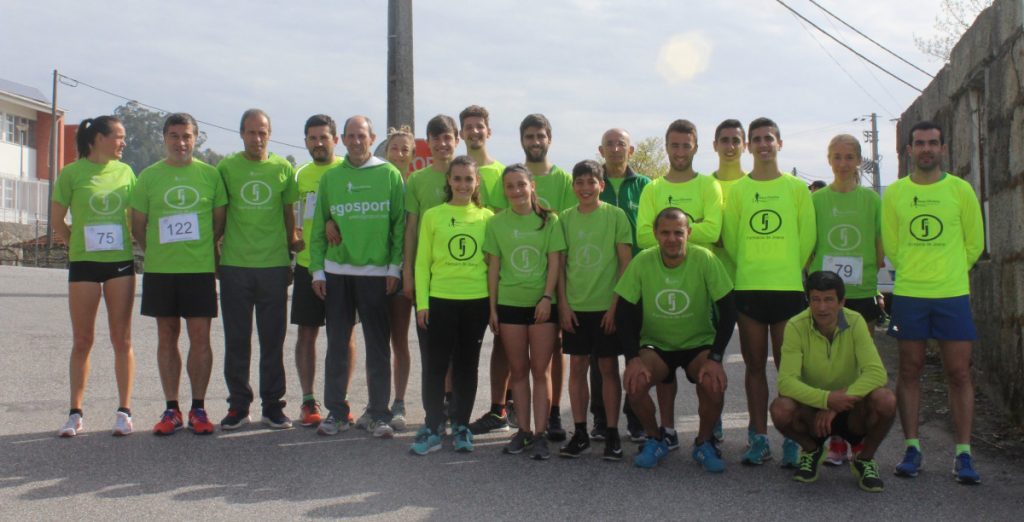
Disputou-se no passado sábado em Guimarães o Campeonato Regional de Estrada da Associação de Atletismo de Braga, competição inserida no Grande Prémio de Madre Deus.
O junior Paulo Ricardo Oliveira foi quem mais se destacou do Atlético de Vale S. Martinho – Restaurante Marco ao conseguir o segundo lugar mais alto do pódio no seu escalão e consagrando-se assim vice-campeão regional junior de estrada.
Paulo Oliveira completou os duros 10 kms da prova num tempo de 41m03s, o que constituiu novo recorde pessoal na distância.
Paulo Ricardo Oliveira e Hélder Faria foram os restantes elementos da nossa associação presentes na prova, terminado em 16º e 18º em Séniores Masculinos, com os tempos de 40m02s e 42m30s, respectivamente.
A Escola Atletismo Rosa Oliveira conquistou no passado sábado no Campeonato da Zona Norte Pista-Ar Livre em Arcos de Valdevez duas medalhas.
Em destaque estiveram Ana Marinho que se sagrou Vice Campeã do norte nos 800 metros e Beatriz Fernandes sub Vice Campeã. Participaram ainda Francisco Silva nos 800 que bateu seu recorde pessoal e Bruno Oliveira.
No domingo em Airão Santa Maria (Guimarães) a EARO dominou por completo o Grande Prémio de Atletismo, prova organizada pela Associação Recreativa e Cultural de Airão Santa Maria, com o apoio da junta Freguesia local.
O vencedor foi Nuno Fernandes, seguido pelos seus colegas de equipa Leandro Martins 2º, Rui Fernandes 3º e Miguel Torres 4º.
Em femininos venceu Rosa Oliveira, seguida pelas suas colegas de equipa Sandra Moura e Anabela Silva.
Por equipas a EARO venceu em masculinos e femininos. Correram ainda Hélder Silva, José Araújo, Manuel Machado, Fernando Machado, Paulo Moura, Alexandre Simões, Miguel Marinho e Marcia Oliveira.
We and our [number_of_vendors] partners use cookies and other tracking technologies to store and access information on your device and to process your personal data.
With your consent, we and our partners may process personal data such as unique identifiers, browsing data, and precise geolocation data, including through device scanning. You can accept or reject all by clicking the buttons below, or customize your choices by clicking "Manage Settings".
Some of our partners process your data based on their legitimate interest. You have the right to object to this processing. You can manage these settings by clicking "Manage Settings" and reviewing the legitimate interest options for each purpose and vendor.
This consent applies to this website only. You can withdraw or change your consent at any time by clicking the floating "Cookie Preferences" button at the bottom-left corner of your screen.
Data Processing Purposes: Store and/or access information on a device (397 seeking consent); Use limited data to select advertising (278 seeking consent, 96 using legitimate interest); Create profiles for personalised advertising (294 seeking consent); Use profiles to select personalised advertising (300 seeking consent); Create profiles to personalise content (114 seeking consent); Use profiles to select personalised content (107 seeking consent); Measure advertising performance (300 seeking consent, 132 using legitimate interest); Measure content performance (138 seeking consent, 56 using legitimate interest); Understand audiences through statistics or combinations of data from different sources (198 seeking consent, 67 using legitimate interest); Develop and improve services (200 seeking consent, 107 using legitimate interest); Use limited data to select content (62 seeking consent, 22 using legitimate interest)
Special Features: Use precise geolocation data; Identify devices based on information actively requested
Review and customize your consent choices for purposes and vendors. You can grant or withdraw consent for each purpose and vendor individually, or use the buttons below to accept or reject all.
The choices you make regarding the purposes and entities listed in this notice are saved in your browser's localStorage and a cookie named "wpconsent_tcstring" for a maximum duration of 12 months.
Non-IAB TCF Categories
These categories are not part of the IAB Transparency & Consent Framework.
Essential cookies enable basic functions and are necessary for the proper function of the website.
Name
Description
Duration
IAB TC String
This cookie stores the IAB Transparency & Consent Framework consent string, recording the user's choices for IAB TCF purposes and vendors.
12 months
Cookie Preferences
This cookie is used to store the user's cookie consent preferences.
30 days
IAB TCF Purposes
These purposes are part of the IAB Transparency & Consent Framework.
Store and/or access information on a device (397 seeking consent)
Cookies, device or similar online identifiers (e.g. login-based identifiers, randomly assigned identifiers, network based identifiers) together with other information (e.g. browser type and information, language, screen size, supported technologies etc.) can be stored or read on your device to recognise it each time it connects to an app or to a website, for one or several of the purposes presented here.
Examples:
Most purposes explained in this notice rely on the storage or accessing of information from your device when you use an app or visit a website. For example, a vendor or publisher might need to store a cookie on your device during your first visit on a website, to be able to recognise your device during your next visits (by accessing this cookie each time).
Use limited data to select advertising (278 seeking consent, 96 using legitimate interest)
Advertising presented to you on this service can be based on limited data, such as the website or app you are using, your non-precise location, your device type or which content you are (or have been) interacting with (for example, to limit the number of times an ad is presented to you).
Examples:
A car manufacturer wants to promote its electric vehicles to environmentally conscious users living in the city after office hours. The advertising is presented on a page with related content (such as an article on climate change actions) after 6:30 p.m. to users whose non-precise location suggests that they are in an urban zone.
A large producer of watercolour paints wants to carry out an online advertising campaign for its latest watercolour range, diversifying its audience to reach as many amateur and professional artists as possible and avoiding showing the ad next to mismatched content (for instance, articles about how to paint your house). The number of times that the ad has been presented to you is detected and limited, to avoid presenting it too often.
Create profiles for personalised advertising (294 seeking consent)
Information about your activity on this service (such as forms you submit, content you look at) can be stored and combined with other information about you (for example, information from your previous activity on this service and other websites or apps) or similar users. This is then used to build or improve a profile about you (that might include possible interests and personal aspects). Your profile can be used (also later) to present advertising that appears more relevant based on your possible interests by this and other entities.
Examples:
If you read several articles about the best bike accessories to buy, this information could be used to create a profile about your interest in bike accessories. Such a profile may be used or improved later on, on the same or a different website or app to present you with advertising for a particular bike accessory brand. If you also look at a configurator for a vehicle on a luxury car manufacturer website, this information could be combined with your interest in bikes to refine your profile and make an assumption that you are interested in luxury cycling gear.
An apparel company wishes to promote its new line of high-end baby clothes. It gets in touch with an agency that has a network of clients with high income customers (such as high-end supermarkets) and asks the agency to create profiles of young parents or couples who can be assumed to be wealthy and to have a new child, so that these can later be used to present advertising within partner apps based on those profiles.
Use profiles to select personalised advertising (300 seeking consent)
Advertising presented to you on this service can be based on your advertising profiles, which can reflect your activity on this service or other websites or apps (like the forms you submit, content you look at), possible interests and personal aspects.
Examples:
An online retailer wants to advertise a limited sale on running shoes. It wants to target advertising to users who previously looked at running shoes on its mobile app. Tracking technologies might be used to recognise that you have previously used the mobile app to consult running shoes, in order to present you with the corresponding advertisement on the app.
A profile created for personalised advertising in relation to a person having searched for bike accessories on a website can be used to present the relevant advertisement for bike accessories on a mobile app of another organisation.
Create profiles to personalise content (114 seeking consent)
Information about your activity on this service (for instance, forms you submit, non-advertising content you look at) can be stored and combined with other information about you (such as your previous activity on this service or other websites or apps) or similar users. This is then used to build or improve a profile about you (which might for example include possible interests and personal aspects). Your profile can be used (also later) to present content that appears more relevant based on your possible interests, such as by adapting the order in which content is shown to you, so that it is even easier for you to find content that matches your interests.
Examples:
You read several articles on how to build a treehouse on a social media platform. This information might be added to a profile to mark your interest in content related to outdoors as well as do-it-yourself guides (with the objective of allowing the personalisation of content, so that for example you are presented with more blog posts and articles on treehouses and wood cabins in the future).
You have viewed three videos on space exploration across different TV apps. An unrelated news platform with which you have had no contact builds a profile based on that viewing behaviour, marking space exploration as a topic of possible interest for other videos.
Use profiles to select personalised content (107 seeking consent)
Content presented to you on this service can be based on your content personalisation profiles, which can reflect your activity on this or other services (for instance, the forms you submit, content you look at), possible interests and personal aspects. This can for example be used to adapt the order in which content is shown to you, so that it is even easier for you to find (non-advertising) content that matches your interests.
Examples:
You read articles on vegetarian food on a social media platform and then use the cooking app of an unrelated company. The profile built about you on the social media platform will be used to present you vegetarian recipes on the welcome screen of the cooking app.
You have viewed three videos about rowing across different websites. An unrelated video sharing platform will recommend five other videos on rowing that may be of interest to you when you use your TV app, based on a profile built about you when you visited those different websites to watch online videos.
Measure advertising performance (300 seeking consent, 132 using legitimate interest)
Information regarding which advertising is presented to you and how you interact with it can be used to determine how well an advert has worked for you or other users and whether the goals of the advertising were reached. For instance, whether you saw an ad, whether you clicked on it, whether it led you to buy a product or visit a website, etc. This is very helpful to understand the relevance of advertising campaigns.
Examples:
You have clicked on an advertisement about a “black Friday” discount by an online shop on the website of a publisher and purchased a product. Your click will be linked to this purchase. Your interaction and that of other users will be measured to know how many clicks on the ad led to a purchase.
You are one of very few to have clicked on an advertisement about an “international appreciation day” discount by an online gift shop within the app of a publisher. The publisher wants to have reports to understand how often a specific ad placement within the app, and notably the “international appreciation day” ad, has been viewed or clicked by you and other users, in order to help the publisher and its partners (such as agencies) optimise ad placements.
Measure content performance (138 seeking consent, 56 using legitimate interest)
Information regarding which content is presented to you and how you interact with it can be used to determine whether the (non-advertising) content e.g. reached its intended audience and matched your interests. For instance, whether you read an article, watch a video, listen to a podcast or look at a product description, how long you spent on this service and the web pages you visit etc. This is very helpful to understand the relevance of (non-advertising) content that is shown to you.
Examples:
You have read a blog post about hiking on a mobile app of a publisher and followed a link to a recommended and related post. Your interactions will be recorded as showing that the initial hiking post was useful to you and that it was successful in interesting you in the related post. This will be measured to know whether to produce more posts on hiking in the future and where to place them on the home screen of the mobile app.
You were presented a video on fashion trends, but you and several other users stopped watching after 30 seconds. This information is then used to evaluate the right length of future videos on fashion trends.
Understand audiences through statistics or combinations of data from different sources (198 seeking consent, 67 using legitimate interest)
Reports can be generated based on the combination of data sets (like user profiles, statistics, market research, analytics data) regarding your interactions and those of other users with advertising or (non-advertising) content to identify common characteristics (for instance, to determine which target audiences are more receptive to an ad campaign or to certain contents).
Examples:
The owner of an online bookstore wants commercial reporting showing the proportion of visitors who consulted and left its site without buying, or consulted and bought the last celebrity autobiography of the month, as well as the average age and the male/female distribution of each category. Data relating to your navigation on its site and to your personal characteristics is then used and combined with other such data to produce these statistics.
An advertiser wants to better understand the type of audience interacting with its adverts. It calls upon a research institute to compare the characteristics of users who interacted with the ad with typical attributes of users of similar platforms, across different devices. This comparison reveals to the advertiser that its ad audience is mainly accessing the adverts through mobile devices and is likely in the 45-60 age range.
Develop and improve services (200 seeking consent, 107 using legitimate interest)
Information about your activity on this service, such as your interaction with ads or content, can be very helpful to improve products and services and to build new products and services based on user interactions, the type of audience, etc. This specific purpose does not include the development or improvement of user profiles and identifiers.
Examples:
A technology platform working with a social media provider notices a growth in mobile app users, and sees based on their profiles that many of them are connecting through mobile connections. It uses a new technology to deliver ads that are formatted for mobile devices and that are low-bandwidth, to improve their performance.
An advertiser is looking for a way to display ads on a new type of consumer device. It collects information regarding the way users interact with this new kind of device to determine whether it can build a new mechanism for displaying advertising on this type of device.
Use limited data to select content (62 seeking consent, 22 using legitimate interest)
Content presented to you on this service can be based on limited data, such as the website or app you are using, your non-precise location, your device type, or which content you are (or have been) interacting with (for example, to limit the number of times a video or an article is presented to you).
Examples:
A travel magazine has published an article on its website about the new online courses proposed by a language school, to improve travelling experiences abroad. The school’s blog posts are inserted directly at the bottom of the page, and selected on the basis of your non-precise location (for instance, blog posts explaining the course curriculum for different languages than the language of the country you are situated in).
A sports news mobile app has started a new section of articles covering the most recent football games. Each article includes videos hosted by a separate streaming platform showcasing the highlights of each match. If you fast-forward a video, this information may be used to select a shorter video to play next.