


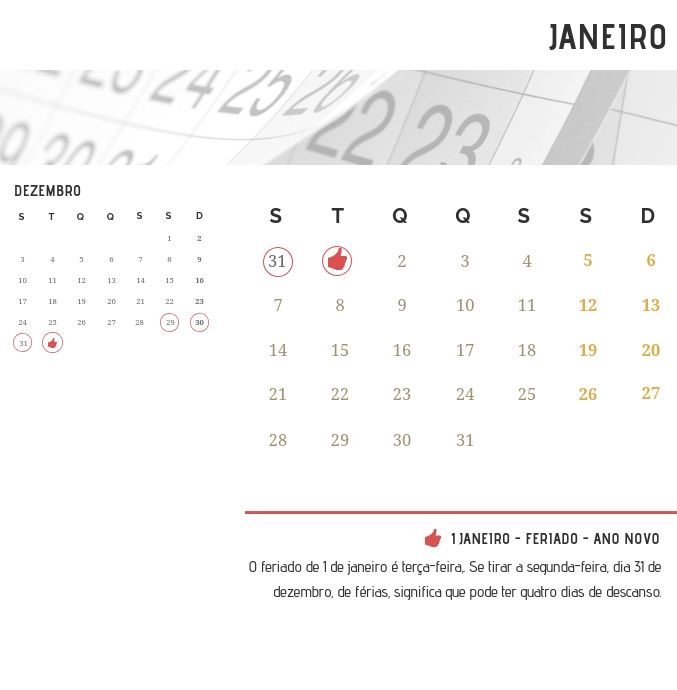
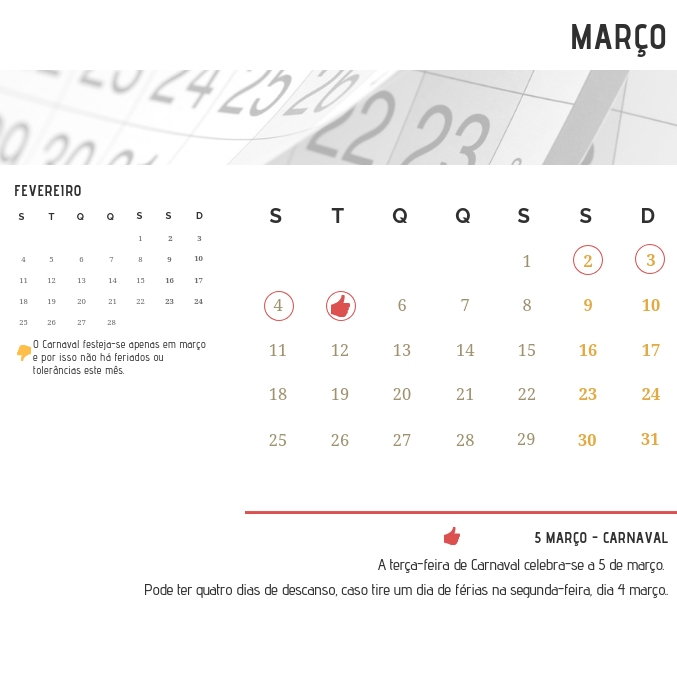
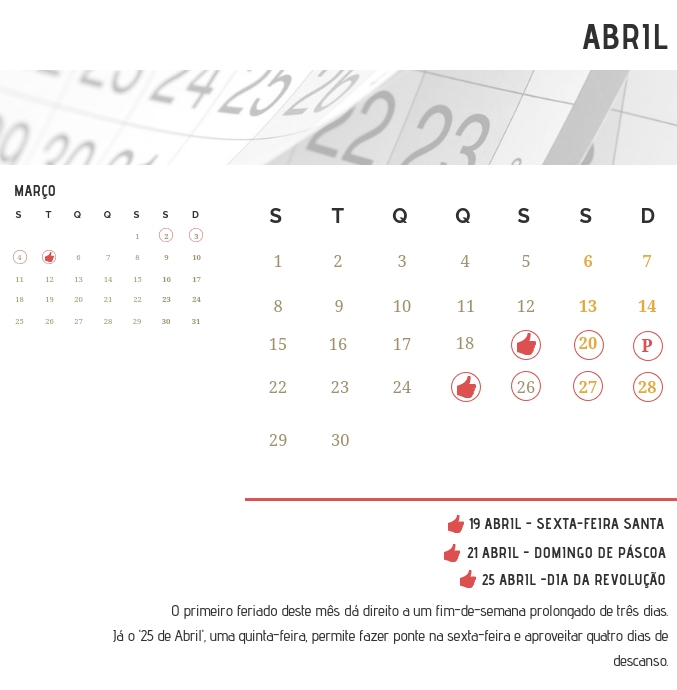
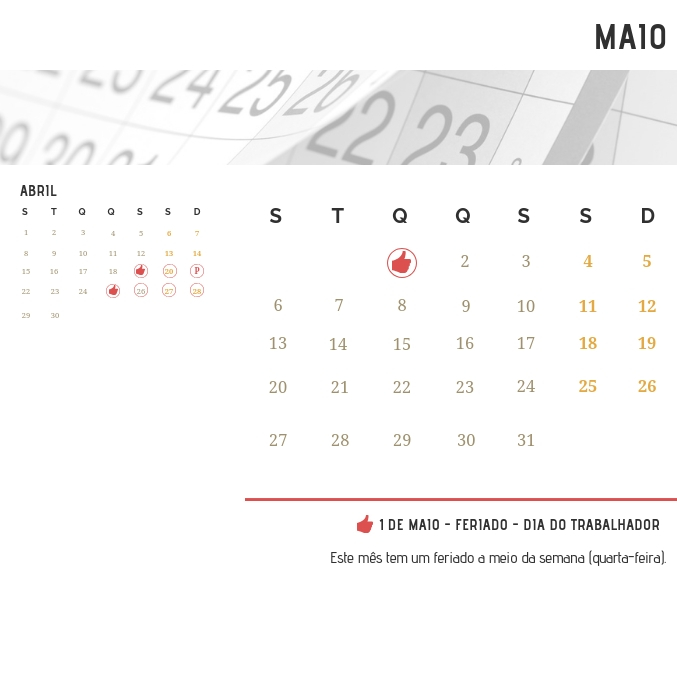
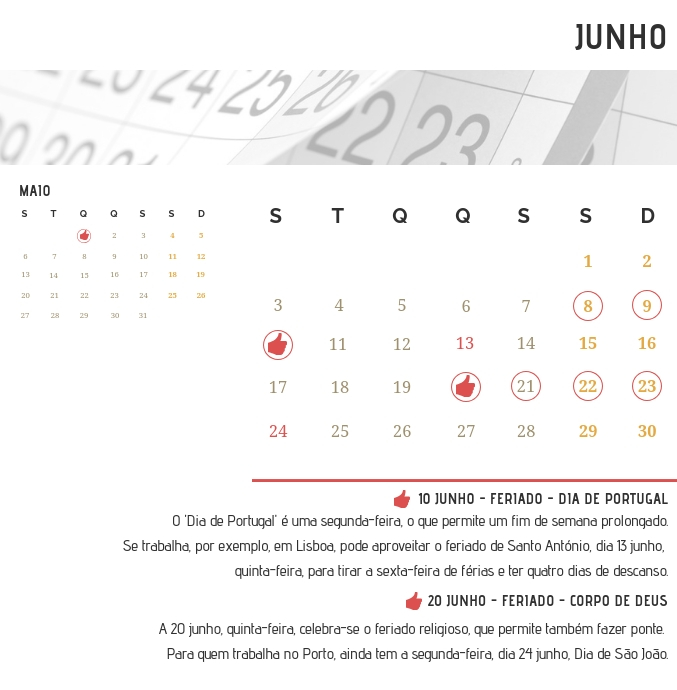
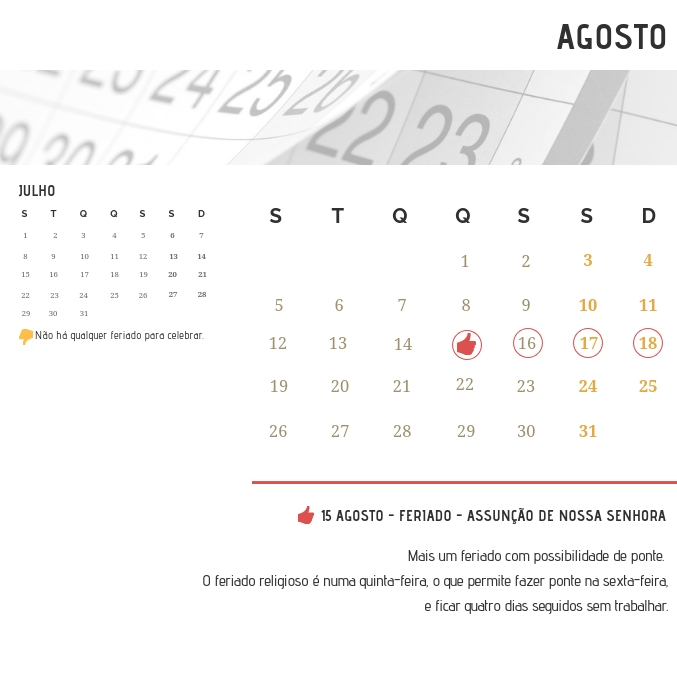
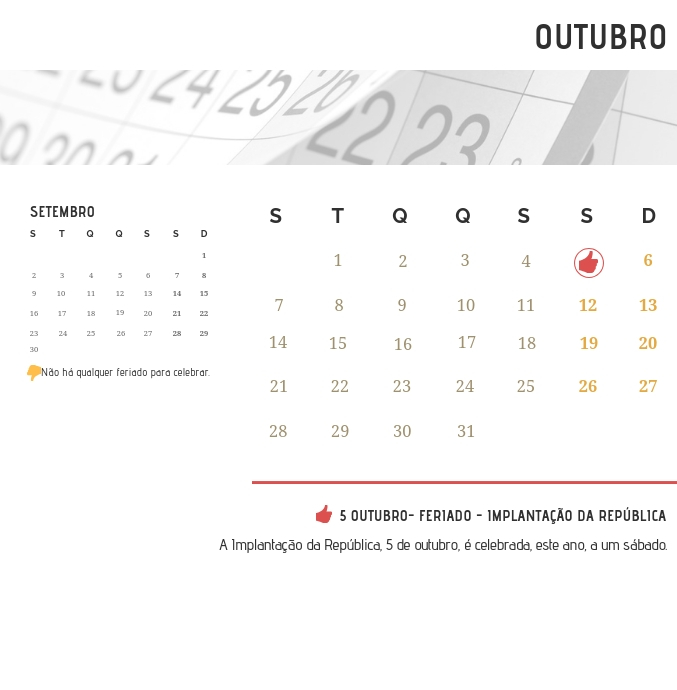
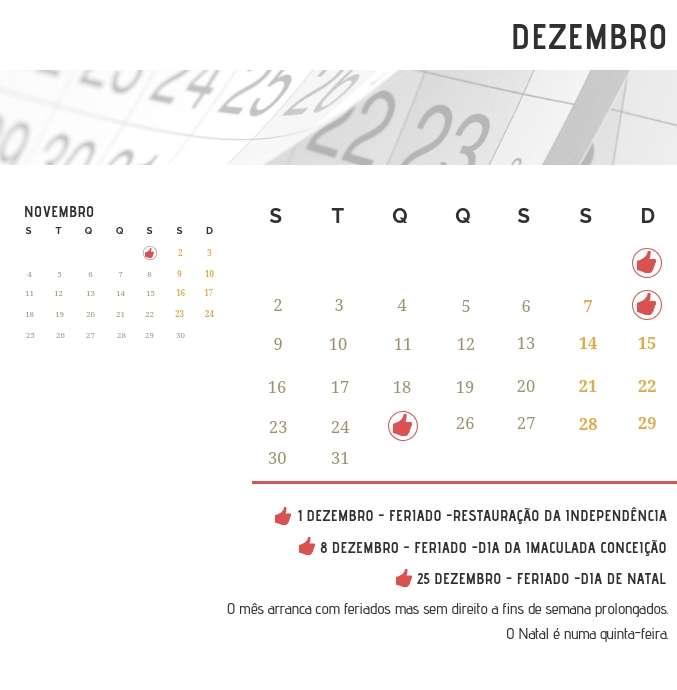


2019 tem três fins de semana prolongados e cinco “pontes”



O Banco Alimentar contra a Fome recolheu 2 146 toneladas de alimentos durante o fim de semana da campanha nacional que decorreu em mais de duas mil superfícies comerciais.
Em declarações à Lusa, a presidente do Banco Alimentar contra a Fome, Isabel Jonet, afirmou que a campanha “foi fantástica”, e acrescentou que só em Lisboa foram recolhidas 557 toneladas, “mais 30 toneladas por dia que no ano anterior”.
No sábado, primeiro dia da campanha, a responsável indicou que tinham sido recolhidas 1 059 toneladas de alimentos.
As 2 146 toneladas serão entregues, na próxima semana, a 2 600 instituições de solidariedade social, que os entregam a cerca de 400 mil pessoas com carências alimentares comprovadas, indicou o Banco Alimentar contra a Fome, em comunicado.
“Agradecemos aos muitos milhares de doadores de alimentos, a todos os voluntários e às inúmeras empresas e entidades que tornaram possível esta campanha, dando assim uma vez mais um contributo inestimável que permite aos Bancos Alimentares continuarem a acudir a muitos dos nossos concidadãos mais necessitados. Tudo somado, embora não possamos ainda fazer um balanço final, pois a campanha decorre online até 09 de Dezembro, os resultados são muito positivos”, referiu Isabel Jonet, na mesma nota.
O Banco Alimentar contra a Fome agradeceu ainda visita, no sábado, do Presidente da República, Marcelo Rebelo de Sousa, às instalações do Banco Alimentar, em Lisboa, na companhia do homólogo de Cabo Verde, Jorge Carlos Fonseca.
Rodeados de dezenas de voluntários, os dois chefes de Estado ajudaram, já de madrugada, a desensacar alimentos.
“É uma obra nacional, que está acima de tudo, governos, oposições, partidos, sensibilidades, setores sociais, mobiliza 40 mil voluntários, na maioria esmagadora jovens”, afirmou Rebelo de Sousa.
A campanha do Banco Alimentar contra a Fome contou com o apoio de mais de 40 mil voluntários.
Até 09 de dezembro, é possível contribuir através do site www.alimentestaideia.pt, ou em vales (“Ajuda Vale”) disponíveis nos estabelecimentos comerciais.
Os enfermeiros admitem prolongar a greve em blocos operatórios, que está em curso até ao fim do mês, e garantem que “não vão desistir da luta”.
A garantia é do presidente do Sindicato Democrático dos Enfermeiros, Carlos Ramalho, que em declarações à Agência Lusa, diz que “cada vez os enfermeiros estão mais determinados em manter esta luta e só param quando o Governo, de facto, assumir um compromisso sério de negociação com os enfermeiros”.
O presidente do Sindicato Democrático dos Enfermeiros Portugueses (Sindepor) participou, esta manhã, numa ação de protesto junto ao hospital Santa Maria, em Lisboa, um dos cinco hospitais onde decorre a greve de mais de um mês em blocos operatórios.
Questionado pela agência Lusa, Carlos Ramalho disse ser “muito provável” que os sindicatos prolonguem esta greve ou emitam novo pré-aviso de greve no fim desta paralisação, que termina a 31 de dezembro, e está a provocar o adiamento de cerca de 500 cirurgias programadas por dia, de acordo com dados dos sindicatos.
A atual greve às cirurgias em blocos operatórios de cinco hospitais públicos surgiu inicialmente de um movimento de enfermeiros que recorreu a um fundo solidário de recolha de dinheiro para compensar os profissionais que façam greve e percam o salário.
A Scoop e a TMG Automotive são as representantes portuguesas da indústria têxtil e do vestuário no United Nations Global Compact (UNGC), iniciativa das Nações Unidas de cidadania empresarial e que tem como membros empresas de todo o mundo com provas dadas nas áreas dos direitos humanos, práticas laborais, proteção ambiental e anticorrupção.
Trata-se de um reconhecimento ímpar e que vem fortalecer a estratégia assumida por estas duas empresas têxteis de Vila Nova de Famalicão.
Para serem aceites, Scoop e TMG Automotive tiveram de fazer uma descrição completa das suas ações e evidenciar como integram os valores das Nações Unidas. “Temos o compromisso de incluir os princípios da ONU na nossa estratégia, na nossa cultura e no dia-a-dia da empresa”, escreveu Isabel Furtado, CEO da TMG Automotive, na sua carta de candidatura, endereçada a António Guterres, Secretário-Geral das Nações Unidas.
Também Mafalda Pinto, CEO da Scoop, fez acompanhar a apresentação da empresa de um compromisso: “Assumimos uma política de responsabilidade pública e de transparência, alinhada com os princípios do ONU Global Compact”, escreveu na sua carta de candidatura.
A presença no UNGC é reservada exclusivamente a empresas com currículo na luta por uma sociedade mais justa e equilibrada e com uma atitude ecológica responsável. Em Portugal são membros daquele comité cerca de 70 empresas.
O reconhecimento significa também um maior nível de exigência. Como forma de demonstração da sua concordância face aos dez princípios da UNGC, as empresas elaboram e publicam anualmente um relatório onde divulgam as suas atividades em prol desses objetivos.
Até ao momento, com candidaturas vindas de todo o mundo, apenas 9 mil empresas cumpriram os critérios estabelecidos pela ONU.
Até ao dia 24 de dezembro, quem recebe as prendas, em Vila Nova de Famalicão, é o Pai Natal. Instalado na sua Cabana Solidária, montada na Praça 9 de Abril, o Pai Natal prepara-se para receber diariamente a visita de diversas instituições do concelho, escolas, crianças e cidadãos anónimos que vêm carregados de presentes. O cenário parece contraditório, mas o objetivo é nobre.
A iniciativa é promovida pela Câmara Municipal, através do pelouro da Família, e desafia os famalicenses a doarem géneros alimentares e de higiene, que depois serão distribuídos pelas famílias carenciadas do concelho, através da Loja Social de Famalicão. Todos os dias há grande animação proporcionada pelo Pai Natal e pelos duendes, mas também pelas instituições que visitam o espaço.
O Pai Natal chegou, este domingo, à cidade famalicense rodeado por uma atmosfera de magia, cor e fantasia. Muitos milhares de pessoas saíram à rua e acompanharam o desfile do Pai Natal que percorreu algumas das principais artérias da cidade.
Contagiado por este ambiente de alegria e fantasia, o presidente da Câmara Municipal, Paulo Cunha, deu as boas-vindas ao Pai Natal e mostrou-se “muito satisfeito por ver a participação e envolvimento de tantos famalicenses nesta ação”.
Por outro lado, o autarca salientou que o objetivo da Cabana Solidária é “intensificar o ambiente natalício no centro da cidade, puxando pelo espírito solidário dos famalicenses”.
A Cabana Solidária está aberta todos os dias até 24 de dezembro, entre as 10h00 e as 12h30, as 14h30 e as 18h00.
We and our [number_of_vendors] partners use cookies and other tracking technologies to store and access information on your device and to process your personal data.
With your consent, we and our partners may process personal data such as unique identifiers, browsing data, and precise geolocation data, including through device scanning. You can accept or reject all by clicking the buttons below, or customize your choices by clicking "Manage Settings".
Some of our partners process your data based on their legitimate interest. You have the right to object to this processing. You can manage these settings by clicking "Manage Settings" and reviewing the legitimate interest options for each purpose and vendor.
This consent applies to this website only. You can withdraw or change your consent at any time by clicking the floating "Cookie Preferences" button at the bottom-left corner of your screen.
Data Processing Purposes: Store and/or access information on a device (397 seeking consent); Use limited data to select advertising (278 seeking consent, 96 using legitimate interest); Create profiles for personalised advertising (294 seeking consent); Use profiles to select personalised advertising (300 seeking consent); Create profiles to personalise content (114 seeking consent); Use profiles to select personalised content (107 seeking consent); Measure advertising performance (300 seeking consent, 132 using legitimate interest); Measure content performance (138 seeking consent, 56 using legitimate interest); Understand audiences through statistics or combinations of data from different sources (198 seeking consent, 67 using legitimate interest); Develop and improve services (200 seeking consent, 107 using legitimate interest); Use limited data to select content (62 seeking consent, 22 using legitimate interest)
Special Features: Use precise geolocation data; Identify devices based on information actively requested
Review and customize your consent choices for purposes and vendors. You can grant or withdraw consent for each purpose and vendor individually, or use the buttons below to accept or reject all.
The choices you make regarding the purposes and entities listed in this notice are saved in your browser's localStorage and a cookie named "wpconsent_tcstring" for a maximum duration of 12 months.
These categories are not part of the IAB Transparency & Consent Framework.
Essential cookies enable basic functions and are necessary for the proper function of the website.
These purposes are part of the IAB Transparency & Consent Framework.
Cookies, device or similar online identifiers (e.g. login-based identifiers, randomly assigned identifiers, network based identifiers) together with other information (e.g. browser type and information, language, screen size, supported technologies etc.) can be stored or read on your device to recognise it each time it connects to an app or to a website, for one or several of the purposes presented here.
Examples:
Most purposes explained in this notice rely on the storage or accessing of information from your device when you use an app or visit a website. For example, a vendor or publisher might need to store a cookie on your device during your first visit on a website, to be able to recognise your device during your next visits (by accessing this cookie each time).
Advertising presented to you on this service can be based on limited data, such as the website or app you are using, your non-precise location, your device type or which content you are (or have been) interacting with (for example, to limit the number of times an ad is presented to you).
Examples:
A car manufacturer wants to promote its electric vehicles to environmentally conscious users living in the city after office hours. The advertising is presented on a page with related content (such as an article on climate change actions) after 6:30 p.m. to users whose non-precise location suggests that they are in an urban zone.
A large producer of watercolour paints wants to carry out an online advertising campaign for its latest watercolour range, diversifying its audience to reach as many amateur and professional artists as possible and avoiding showing the ad next to mismatched content (for instance, articles about how to paint your house). The number of times that the ad has been presented to you is detected and limited, to avoid presenting it too often.
Information about your activity on this service (such as forms you submit, content you look at) can be stored and combined with other information about you (for example, information from your previous activity on this service and other websites or apps) or similar users. This is then used to build or improve a profile about you (that might include possible interests and personal aspects). Your profile can be used (also later) to present advertising that appears more relevant based on your possible interests by this and other entities.
Examples:
If you read several articles about the best bike accessories to buy, this information could be used to create a profile about your interest in bike accessories. Such a profile may be used or improved later on, on the same or a different website or app to present you with advertising for a particular bike accessory brand. If you also look at a configurator for a vehicle on a luxury car manufacturer website, this information could be combined with your interest in bikes to refine your profile and make an assumption that you are interested in luxury cycling gear.
An apparel company wishes to promote its new line of high-end baby clothes. It gets in touch with an agency that has a network of clients with high income customers (such as high-end supermarkets) and asks the agency to create profiles of young parents or couples who can be assumed to be wealthy and to have a new child, so that these can later be used to present advertising within partner apps based on those profiles.
Advertising presented to you on this service can be based on your advertising profiles, which can reflect your activity on this service or other websites or apps (like the forms you submit, content you look at), possible interests and personal aspects.
Examples:
An online retailer wants to advertise a limited sale on running shoes. It wants to target advertising to users who previously looked at running shoes on its mobile app. Tracking technologies might be used to recognise that you have previously used the mobile app to consult running shoes, in order to present you with the corresponding advertisement on the app.
A profile created for personalised advertising in relation to a person having searched for bike accessories on a website can be used to present the relevant advertisement for bike accessories on a mobile app of another organisation.
Information about your activity on this service (for instance, forms you submit, non-advertising content you look at) can be stored and combined with other information about you (such as your previous activity on this service or other websites or apps) or similar users. This is then used to build or improve a profile about you (which might for example include possible interests and personal aspects). Your profile can be used (also later) to present content that appears more relevant based on your possible interests, such as by adapting the order in which content is shown to you, so that it is even easier for you to find content that matches your interests.
Examples:
You read several articles on how to build a treehouse on a social media platform. This information might be added to a profile to mark your interest in content related to outdoors as well as do-it-yourself guides (with the objective of allowing the personalisation of content, so that for example you are presented with more blog posts and articles on treehouses and wood cabins in the future).
You have viewed three videos on space exploration across different TV apps. An unrelated news platform with which you have had no contact builds a profile based on that viewing behaviour, marking space exploration as a topic of possible interest for other videos.
Content presented to you on this service can be based on your content personalisation profiles, which can reflect your activity on this or other services (for instance, the forms you submit, content you look at), possible interests and personal aspects. This can for example be used to adapt the order in which content is shown to you, so that it is even easier for you to find (non-advertising) content that matches your interests.
Examples:
You read articles on vegetarian food on a social media platform and then use the cooking app of an unrelated company. The profile built about you on the social media platform will be used to present you vegetarian recipes on the welcome screen of the cooking app.
You have viewed three videos about rowing across different websites. An unrelated video sharing platform will recommend five other videos on rowing that may be of interest to you when you use your TV app, based on a profile built about you when you visited those different websites to watch online videos.
Information regarding which advertising is presented to you and how you interact with it can be used to determine how well an advert has worked for you or other users and whether the goals of the advertising were reached. For instance, whether you saw an ad, whether you clicked on it, whether it led you to buy a product or visit a website, etc. This is very helpful to understand the relevance of advertising campaigns.
Examples:
You have clicked on an advertisement about a “black Friday” discount by an online shop on the website of a publisher and purchased a product. Your click will be linked to this purchase. Your interaction and that of other users will be measured to know how many clicks on the ad led to a purchase.
You are one of very few to have clicked on an advertisement about an “international appreciation day” discount by an online gift shop within the app of a publisher. The publisher wants to have reports to understand how often a specific ad placement within the app, and notably the “international appreciation day” ad, has been viewed or clicked by you and other users, in order to help the publisher and its partners (such as agencies) optimise ad placements.
Information regarding which content is presented to you and how you interact with it can be used to determine whether the (non-advertising) content e.g. reached its intended audience and matched your interests. For instance, whether you read an article, watch a video, listen to a podcast or look at a product description, how long you spent on this service and the web pages you visit etc. This is very helpful to understand the relevance of (non-advertising) content that is shown to you.
Examples:
You have read a blog post about hiking on a mobile app of a publisher and followed a link to a recommended and related post. Your interactions will be recorded as showing that the initial hiking post was useful to you and that it was successful in interesting you in the related post. This will be measured to know whether to produce more posts on hiking in the future and where to place them on the home screen of the mobile app.
You were presented a video on fashion trends, but you and several other users stopped watching after 30 seconds. This information is then used to evaluate the right length of future videos on fashion trends.
Reports can be generated based on the combination of data sets (like user profiles, statistics, market research, analytics data) regarding your interactions and those of other users with advertising or (non-advertising) content to identify common characteristics (for instance, to determine which target audiences are more receptive to an ad campaign or to certain contents).
Examples:
The owner of an online bookstore wants commercial reporting showing the proportion of visitors who consulted and left its site without buying, or consulted and bought the last celebrity autobiography of the month, as well as the average age and the male/female distribution of each category. Data relating to your navigation on its site and to your personal characteristics is then used and combined with other such data to produce these statistics.
An advertiser wants to better understand the type of audience interacting with its adverts. It calls upon a research institute to compare the characteristics of users who interacted with the ad with typical attributes of users of similar platforms, across different devices. This comparison reveals to the advertiser that its ad audience is mainly accessing the adverts through mobile devices and is likely in the 45-60 age range.
Information about your activity on this service, such as your interaction with ads or content, can be very helpful to improve products and services and to build new products and services based on user interactions, the type of audience, etc. This specific purpose does not include the development or improvement of user profiles and identifiers.
Examples:
A technology platform working with a social media provider notices a growth in mobile app users, and sees based on their profiles that many of them are connecting through mobile connections. It uses a new technology to deliver ads that are formatted for mobile devices and that are low-bandwidth, to improve their performance.
An advertiser is looking for a way to display ads on a new type of consumer device. It collects information regarding the way users interact with this new kind of device to determine whether it can build a new mechanism for displaying advertising on this type of device.
Content presented to you on this service can be based on limited data, such as the website or app you are using, your non-precise location, your device type, or which content you are (or have been) interacting with (for example, to limit the number of times a video or an article is presented to you).
Examples:
A travel magazine has published an article on its website about the new online courses proposed by a language school, to improve travelling experiences abroad. The school’s blog posts are inserted directly at the bottom of the page, and selected on the basis of your non-precise location (for instance, blog posts explaining the course curriculum for different languages than the language of the country you are situated in).
A sports news mobile app has started a new section of articles covering the most recent football games. Each article includes videos hosted by a separate streaming platform showcasing the highlights of each match. If you fast-forward a video, this information may be used to select a shorter video to play next.
You can find more information in our Cookie Policy and Política de Privacidade.