A Câmara Municipal e a Ascendi chegaram a um acordo de entendimento relativamente ao troço de acesso à A7, em Seide S. Miguel. Esta via, com cerca de 2km, que liga à nacional 206 e municipal 573, passa para o domínio público do município depois da concessionária realizar as obras de reparação e melhoramento da via que devem estar concluídas até 30 de setembro de 2021
Recorde-se que, o Município intentou uma ação judicial contra a Ascendi – Auto Estradas do Norte relativamente à propriedade desta via que foi aberta para fazer a ligação à auto estrada Famalicão-Guimarães.
O processo fica, agora, cancelado, por via deste acordo cuja proposta vai a reunião de Câmara, na manhã desta quinta-feira. Depois, será submetida a discussão e votação em Assembleia Municipal.
A PSP informou que vai efetuar uma série de ações de fiscalização rodoviária em todo o país neste mês de novembro. Em Vila Nova de Famalicão, a fiscalização vai passar pela colocação de um radar móvel de controlo de velocidade na variante nascente, a partir das 09h00 do dia 26 de novembro.
Restantes ações de fiscalização anunciadas:
AÇORES
04/nov/20 13H00 Grota do Vale e Terreiro das Covas – Angra do Heroísmo
06/nov/20 13H00 Rua Longa – Biscoitos – Praia da Vitória
13/nov/20 07H00 Terreiro da Legua – Feteira e Caminho da Cidade – Porto Judeu- Angra do Heroísmo
17/nov/20 07H00 ER 1 – Altares – Angra do Heroísmo
19/nov/20 13H00 Estrada 25 de Abril – Santa Cruz e Estrada Regional nº 1 Lajes – Praia da Vitória
20/nov/20 18H00 ER 1, Freguesia de São Mateus, Concelho da Madalena – Ilha do Pico
24/nov/20 07H00 Negrito -São Mateus e Pesqueiro – São Bartolomeu – Angra do Heroísmo
AVEIRO
09/nov/20 14H00 Av. Universidade – Aveiro
11/nov/20 09H00 Av. Da Régua – Ovar
11/nov/20 15H00 EN 109.4 – Junto à Peraltafil – Espinho
12/nov/20 09H00 Rua da Circunvalação – Santa Maria da Feira
12/nov/20 15H00 Av. do Vale – São João da Madeira
16/nov/20 08H00 Av. Europa – Aveiro
18/nov/20 09H00 Variante da Rotunda da Congosta – Espinho
18/nov/20 15H00 Av. Dr. Francisco Sá Carneiro – Ovar
19/nov/20 15H00 Rua Dr. Eduardo Vaz – Santa Maria da Feira
27/nov/20 14H00 Av. Dr. Sá Carneiro – Aveiro
BEJA
11/nov/20 09H00 Av. Salgueiro Maia – Beja
17/nov/20 09H00 Rua Francisco Miguel Duarte – Beja
24/nov/20 09H00 Rua Manuel Joaquim Delgado – Beja
BRAGA
04/nov/20 15H00 Variante Cávado – Braga
05/nov/20 09H00 Circular Urbana – Guimarães
06/nov/20 14H00 Circular de Barcelos – Viaduto do Queimado – Vila Frescaínha São Martinho – Barcelos
19/nov/20 09H00 Circular Urbana – Guimarães
20/nov/20 10H00 Av. António Macedo – Braga
26/nov/20 09H00 Variante EN 14 – V.N. Famalicão
BRAGANÇA
12/nov/20 08H00 EN 15 – Mirandela
13/nov/20 08H00 Av. Abade de Baçal – Bragança
24/nov/20 08H00 Av. das Cantarias – Bragança
25/nov/20 08H00 EN 213, Km 54 – Mirandela
CASTELO BRANCO
09/nov/20 08H00 Alameda Pêro da Covilhã – Covilhã
11/nov/20 10H00 Av. Dia de Portugal – Castelo Branco
16/nov/20 17H00 Eixo TCT – Covilhã
18/nov/20 13H30 Chão de Santo André – Castelo Branco
COIMBRA
05/nov/20 08H00 IC 2 Ponte Edgar Cardoso – Figueira da Foz
10/nov/20 09H00 EN 341 – Taveiro/Coimbra – Km 46
11/nov/20 08H00 Av. Drº. Mário Soares – (Centro Escolar Tavarede) Figueira da Foz
13/nov/20 09H00 Av. da Lousã
17/nov/20 14H00 IC 2 Ponte Edgar Cardoso – Figueira da Foz
19/nov/20 15H00 Av. Fernando Namora
26/nov/20 14H00 Av. Drº. Mário Soares – Figueira da Foz
ÉVORA
12/nov/20 09H30 EN 18 ao Gil – Estremoz
17/nov/20 09H00 CM 1094 – Estrada do Bairro de Almeirim – Évora
23/nov/20 09H00 EN 114 – Avenida Túlio Espanca (sentido Évora/Montemor-o-Novo) – Évora
30/nov/20 16H30 EN 114 – Avenida Túlio Espanca (sentido Montemor-o-Novo/Évora) – Évora
FARO
11/nov/20 09H00 Av. 5 de Outubro – Olhão
12/nov/20 09H00 Av. de Castro Marim – Vila R. Stº António
12/nov/20 21H00 Av. Gordinho Moreira – Faro
13/nov/20 14h00 Av. V6 – Portimão
17/nov/20 10H00 Av. da Fonte Coberta – Lagos
19/nov/20 21H00 Av. Gordinho Moreira – Faro
21/nov/20 09H00 Av. V6 – Portimão
26/nov/20 09H00 Rua da Cruz Vermelha – Tavira
GUARDA
04/nov/20 08H00 EM 577 – Guarda
12/nov/20 08H00 Via de Cintura Externa da Guarda
18/nov/20 14H00 EM 577 – Guarda
25/nov/20 14H00 Via de Cintura Externa da Guarda
LEIRIA
05/nov/20 09H00 N356-1 Km 5,600 – Leiria
06/nov/20 09h00 Rua Costa Veiga/Rua de Leiria – Alcobaça
24/nov/20 09H00 Rua Central do Moinho de Cima – Albergaria – Marinha Grande
LISBOA
07/nov/20 08H00 IC 19 – Cacém
09/nov/20 08H00 Estrada dos Salgados – Amadora
10/nov/20 08H00 EN 250 – Belas
10/nov/20 14H00 Av. Capitães de Abril – Mem-Martins
11/nov/20 09H00 Rua Comandante Ramiro Correia – Unhos
11/nov/20 14H00 Rua Doutor Armindo Santos Ferreira, Santo António dos Cavaleiros
12/nov/20 08H00 EN 10 KM 125.4 – Piscinas da CIMPOR, sentido Alverca/Alhandra
19/nov/20 13H00 EN 249-3 Porto Salvo, Norte/Sul
24/nov/20 09H00 Av. Marginal – Hotel Miragem – Estoril
26/nov/20 14H00 Av. Calouste Gulbenkian – Lisboa
MADEIRA
05/nov/20 08H00 Estrada do Aeroporto (reta da Pinheira); Rua da Ribeira João Gomes e Rua Nova de São João
11/nov/20 14H00 Travessa do Valado com VR 1; VR 1 (entre Kms 15 e 15.1) viaduto das Madalenas e Rua do Comboio
17/nov/20 08H00 Estrada do Aeroporto, Mãe de Deus – Caniço
22/nov/20 13H00 VR 1 Km 9.4 sentido este/oeste – Câmara de Lobos
26/nov/20 08H00 Estrada da Vitória; Estrada Comandante Camacho de Freitas e Rua EUA
30/nov/20 17H00 VE 1 – Túnel do Cortado/VE 1 Moinhos – Faial
30/nov/20 19H00 ER 222 – Canhas e VE 3 Km 6.9 Túnel Ponta do Sol/Madalena do Mar
PORTALEGRE
05/nov/20 08H30 Av. do Dia de Portugal – Elvas
11/nov/20 08H00 Av. do Dia de Portugal – Elvas
25/nov/20 08H00 EN 246 – Portalegre
27/nov/20 08H00 Av. de Badajoz – Portalegre
PORTO
09/nov/20 20H00 Av. D. João II – Oliveira do Douro
11/nov/20 14H00 Rua Ribeiro Cambado – Valongo
12/nov/20 08H00 Estrada D. Miguel – Gondomar
13/nov/20 08H00 Estrada da Circunvalação – 11 124 – Matosinhos
16/nov/20 20H00 Estrada da Circunvalação – 11089 – Porto
17/nov/20 08H00 Av. Marechal Gomes da Costa – Porto
19/nov/20 14H00 Estrada da Circunvalação – 15443 – Porto
20/nov/20 08H00 Av. Dr. Germano Vieira – Gueifães – Maia
24/nov/20 14H00 Estrada da Circunvalação – 9389 – Porto
26/nov/20 08H00 Rua Gomes Amorim – Póvoa de Varzim
30/nov/20 14H00 Via Eng. Edgar Cardoso – V.N.Gaia
SANTARÉM
04/nov/20 09H00 Av. D. João I – Abrantes
04/nov/20 08H30 Caminho Municipal n.º 1398 – Cartaxo
05/nov/20 08H00 EN 349 – Torres Novas
06/nov/20 14H00 Av. Bombeiros Voluntários – Ourém
09/nov/20 08H00 EN 110 – Calçadas – Tomar
13/nov/20 14H00 Circular Urbana – Santarém
24/nov/20 08H30 Circular Urbana – Cartaxo
26/nov/20 08H00 Av. Dr. Francisco Sá Caneiro – Entroncamento
30/nov/20 08H00 EN 114 – Perofilho – Santarém
SETÚBAL
05/nov/20 09H30 Av. Baia Natural do Seixal – Corroios
10/nov/20 15H00 Av. 1º Maio – Seixal
13/nov/20 08H00 Circular Externa – Montijo
13/nov/20 10H30 Av. Arsenal Alfeite – Corroios – Almada
18/nov/20 10H00 Av. Mar – Amora – Seixal
23/nov/20 09H00 EN 10.3 – Barreiro
23/nov/20 10H30 Av. 1º Dezembro 1640 – Seixal
VIANA DO CASTELO
10/nov/20 09H30 Estrada da Papanata – Viana Do Castelo
13/nov/20 16H30 Rua Agostinho José Taveira – Ponte de Lima
18/nov/20 20H30 Av. Dos Meio – Areosa – Viana do Castelo
25/nov/20 09H30 Av. 25 de Aril – Viana do Castelo
VILA REAL
09/nov/20 14H00 Rua Vasco Sameiro – Vila Real
10/nov/20 14H00 Rua Raínha Dona Mafalda – Chaves
18/nov/20 08H00 Av. Osnabruck – Vila Real
19/nov/20 09H00 Av. Dr. Mário Soares – Chaves
26/nov/20 08H00 Av. da Europa – Vila Real
27/nov/20 14H00 Rua da Paz – Chaves
VISEU
04/nov/20 14H30 EN – Viseu
06/nov/20 14H00 Av. Europa – Viseu
09/nov/20 10H00 Rua Visconde Arneirós – Lamego
10/nov/20 08H00 Estrada Nelas – Viseu
12/nov/20 14H00 Rua D. Marcos de Mendonça (Arruamento das piscinas Municipais) – Lamego
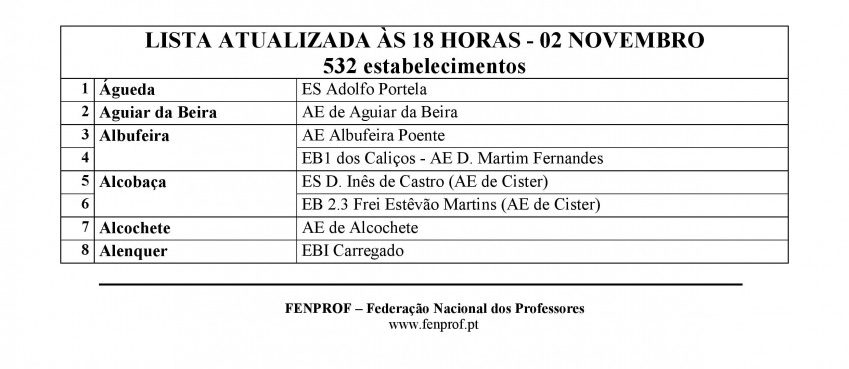
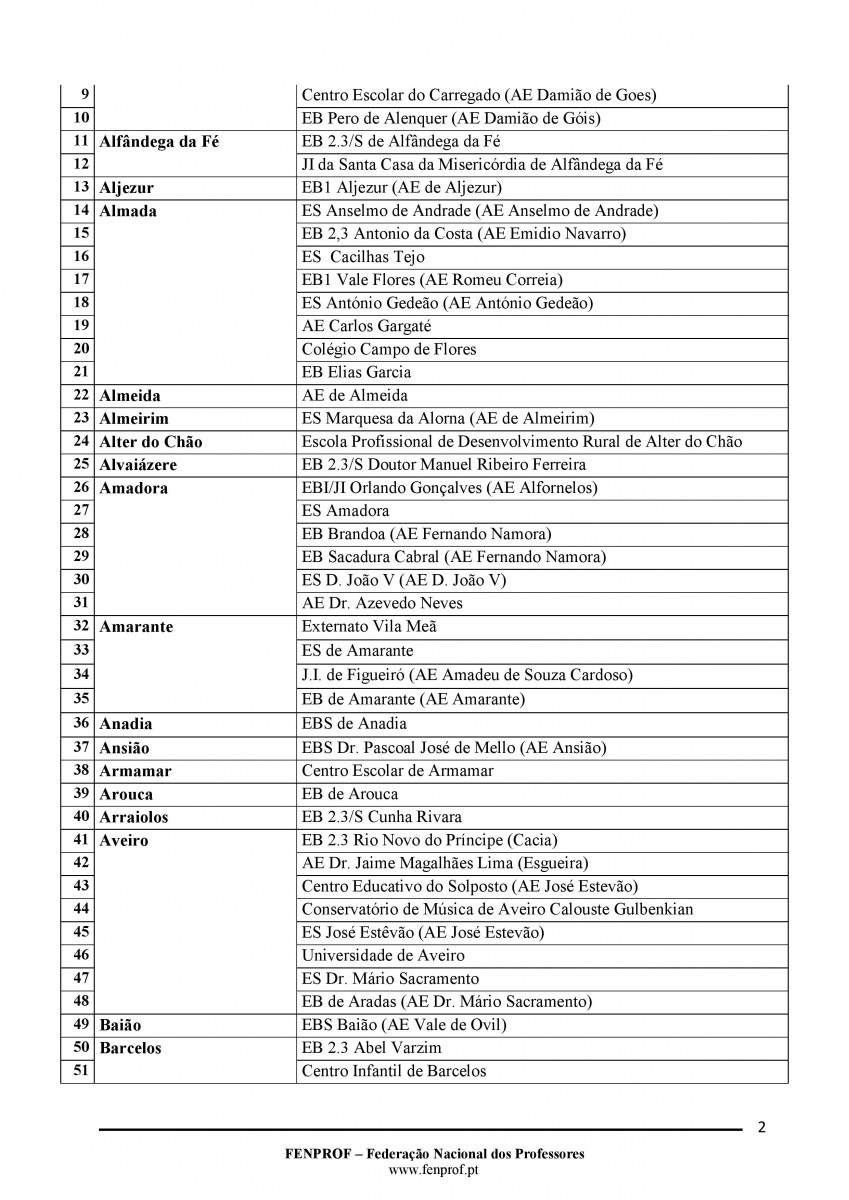
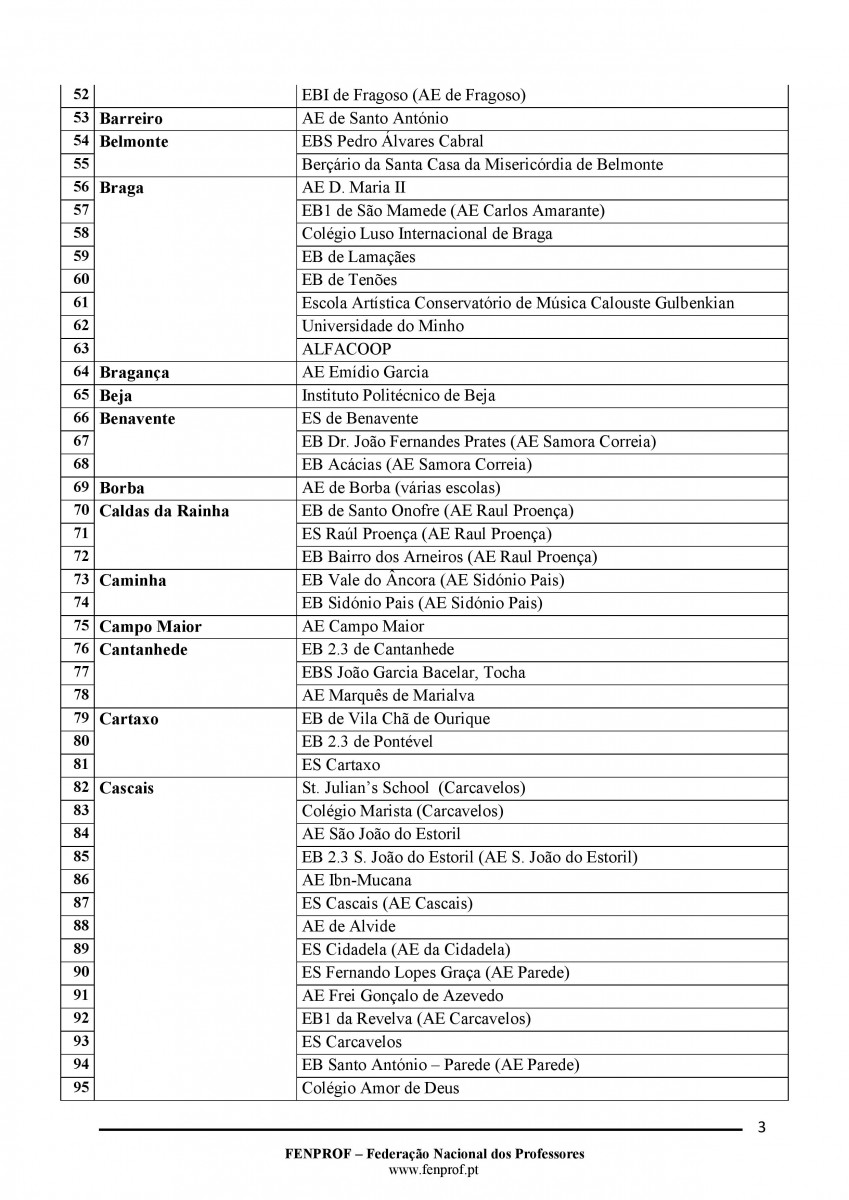
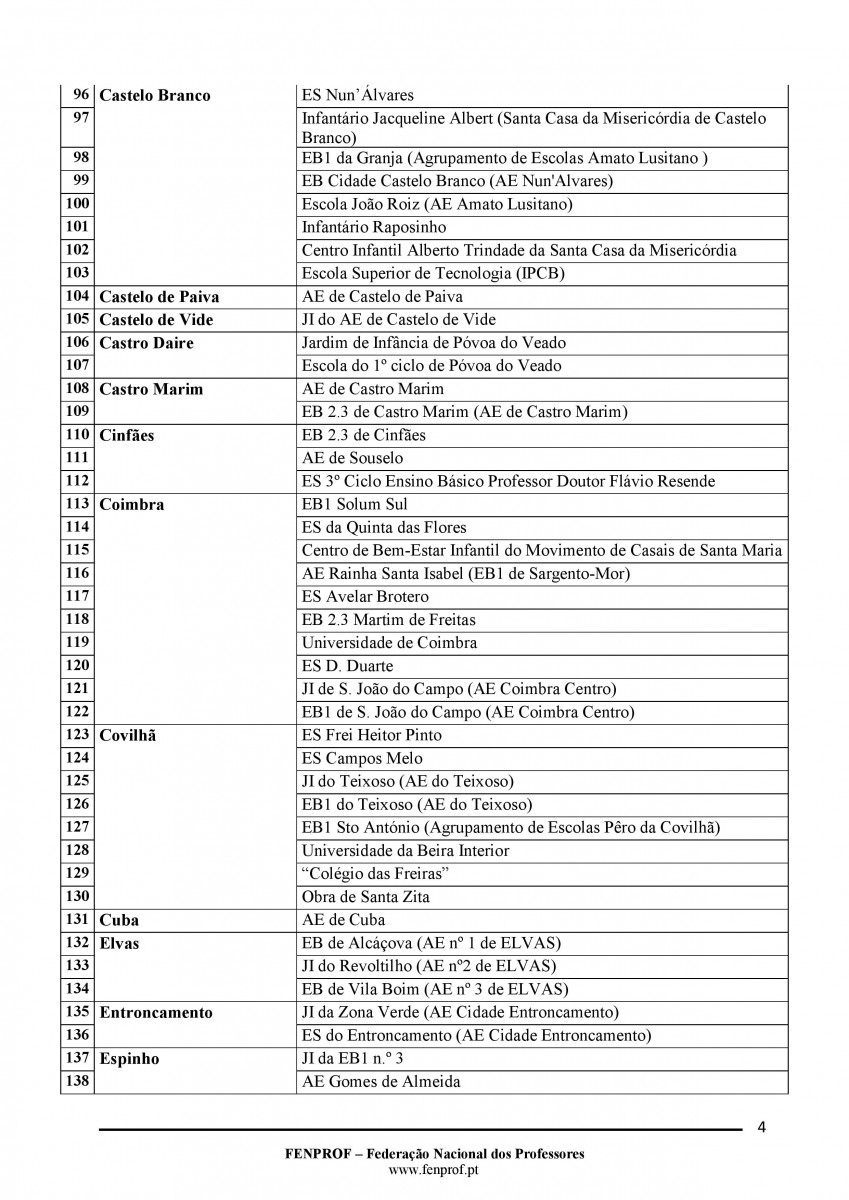
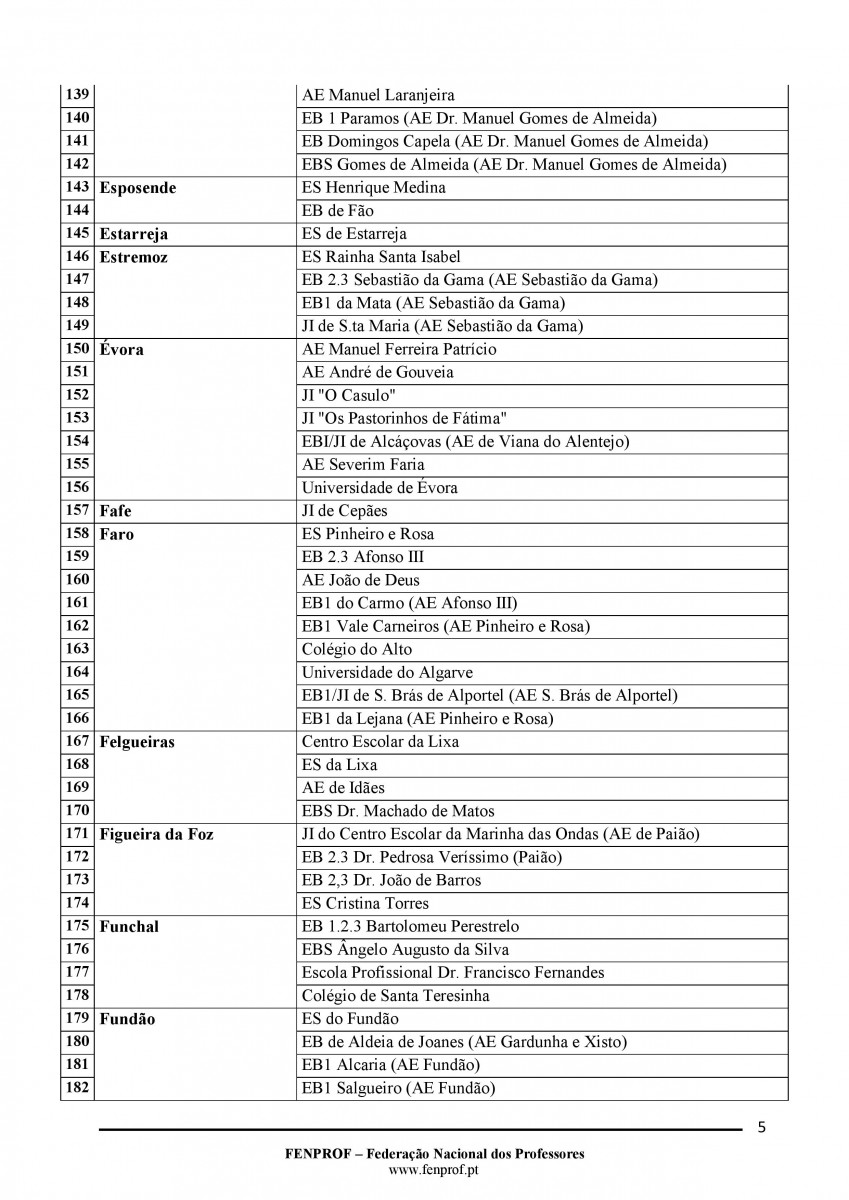
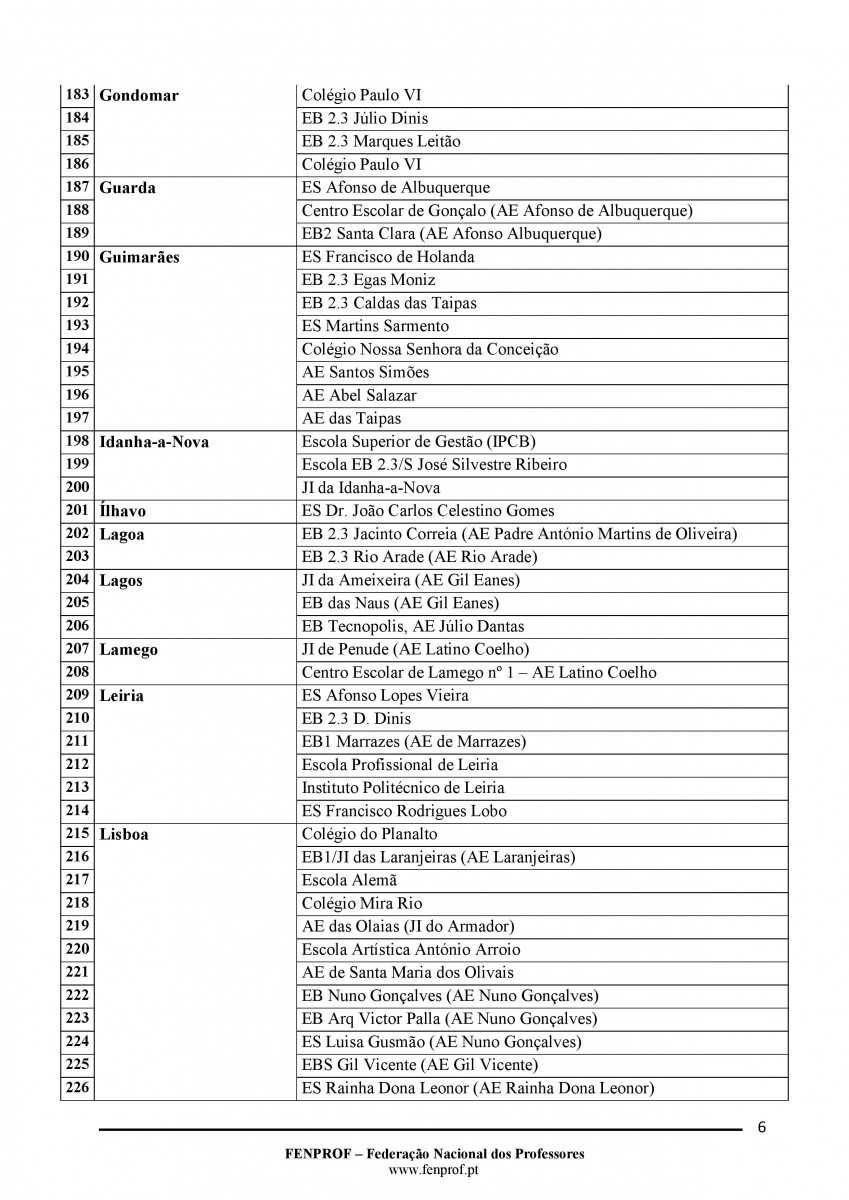
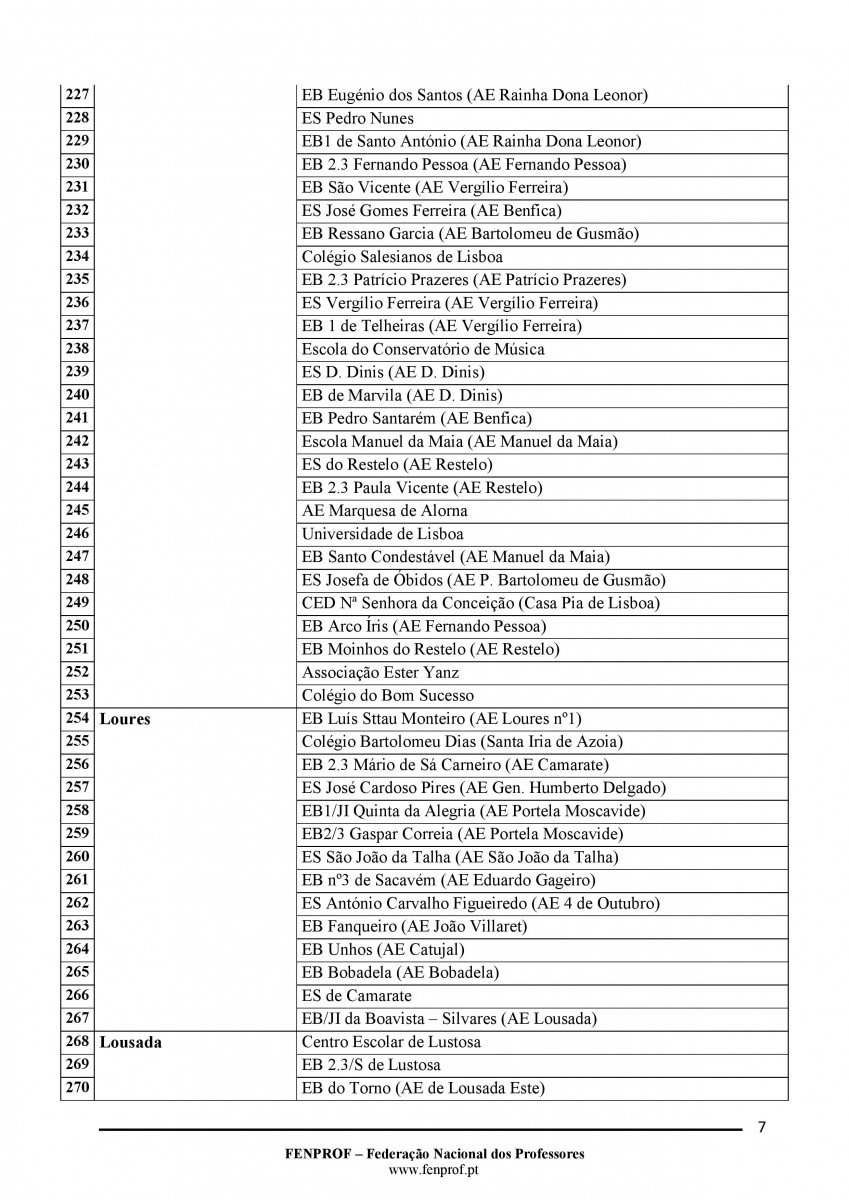
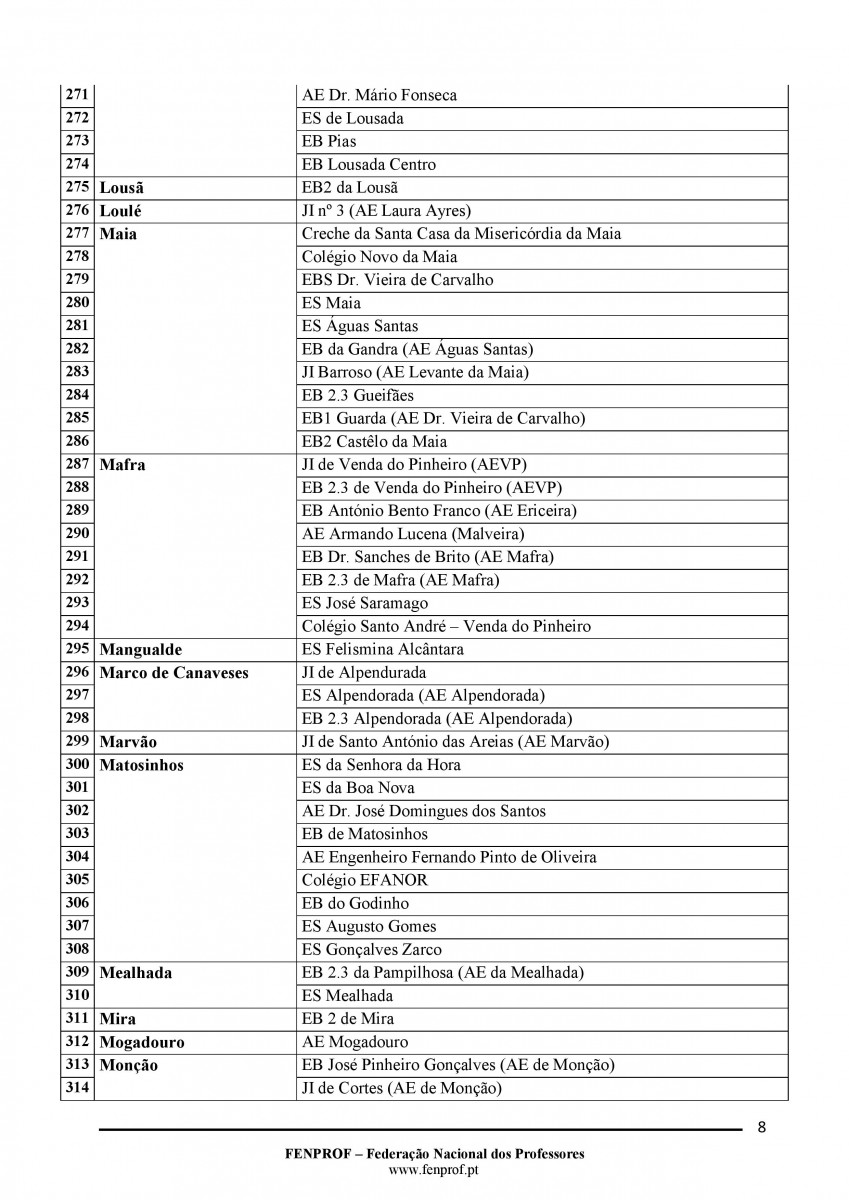
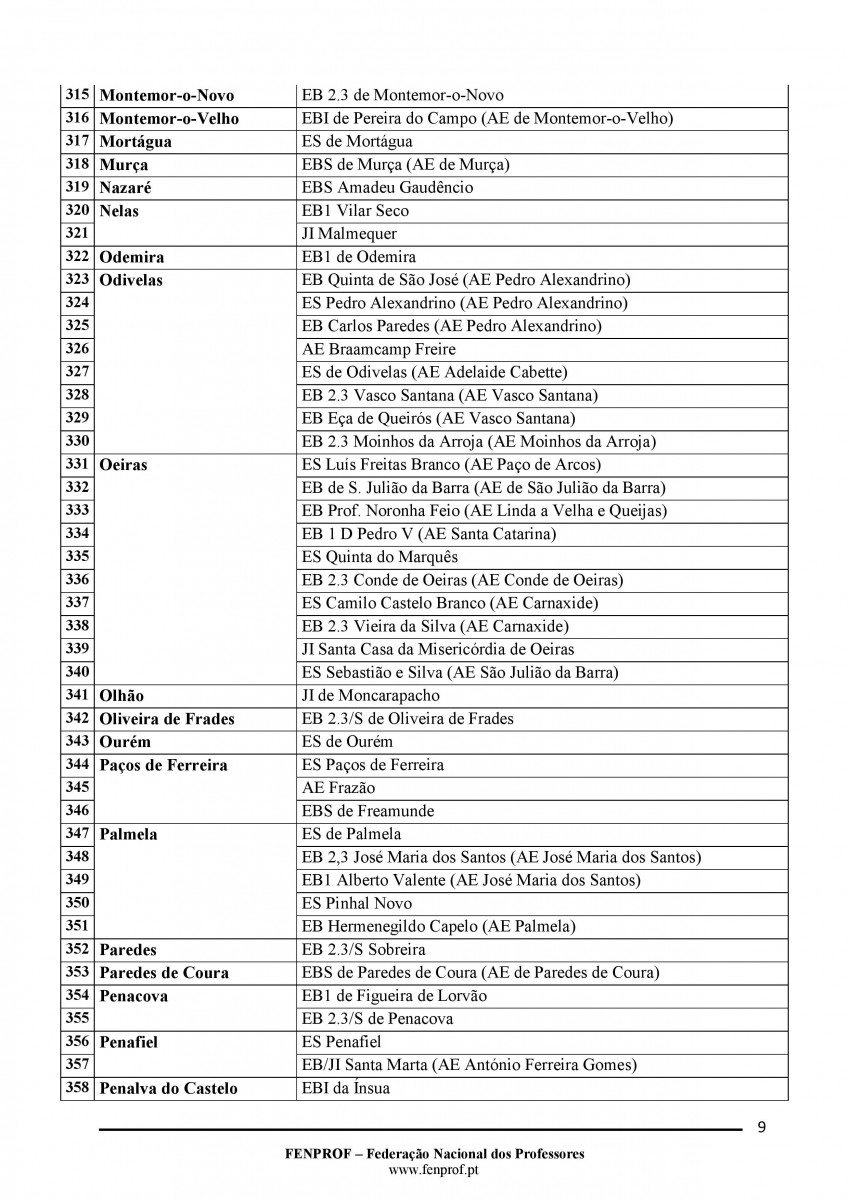
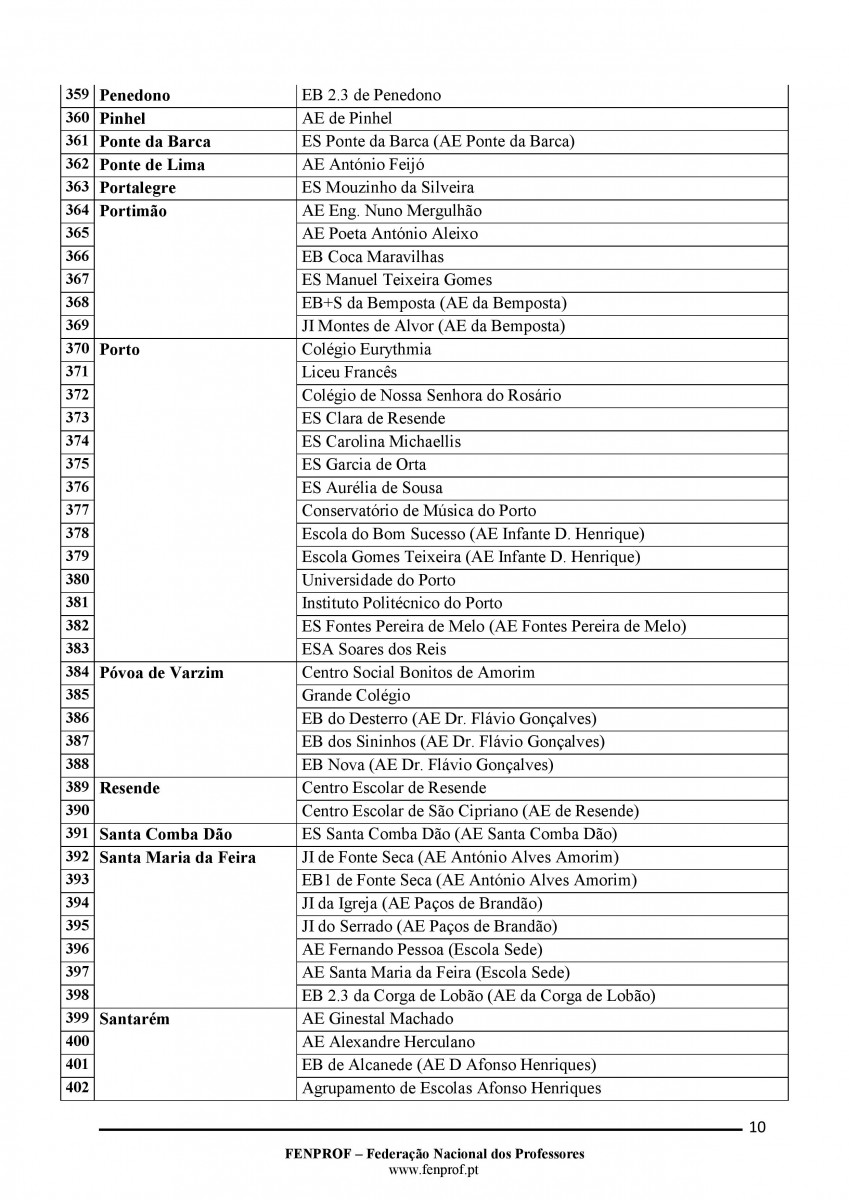
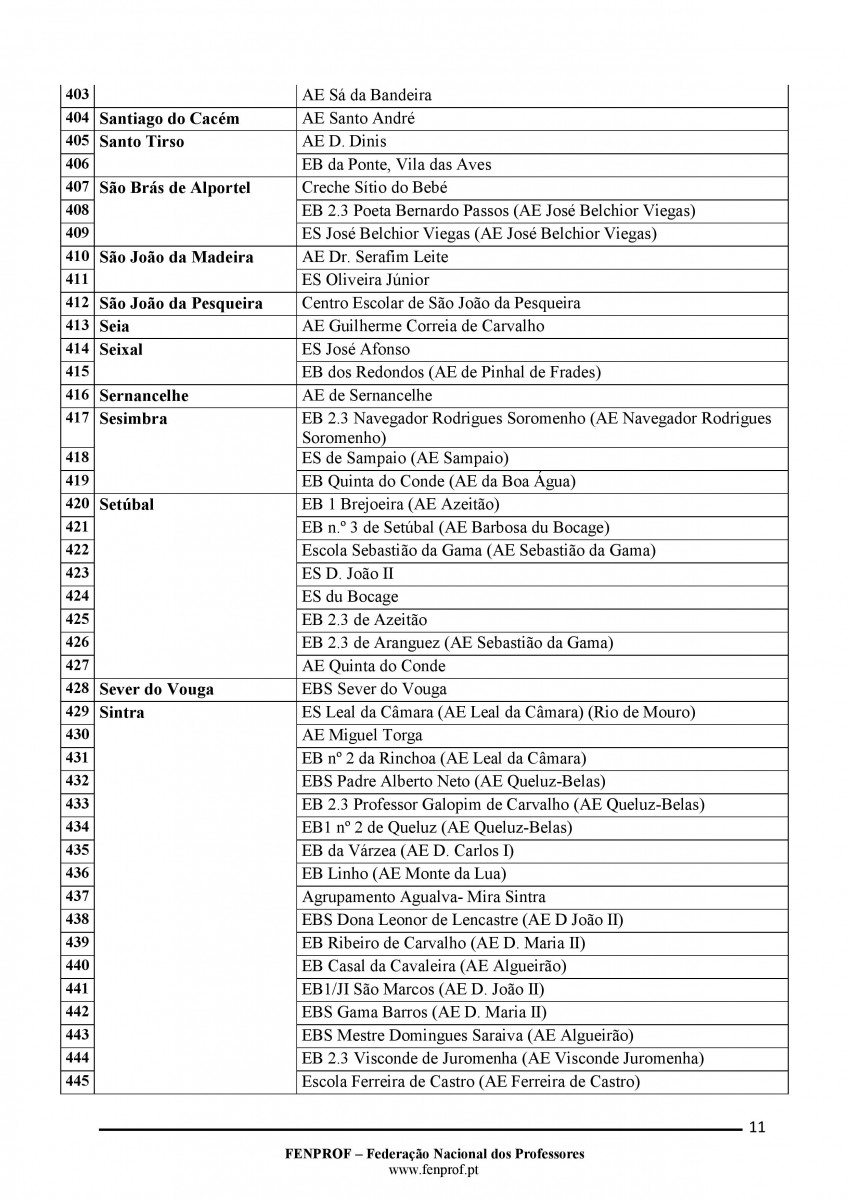
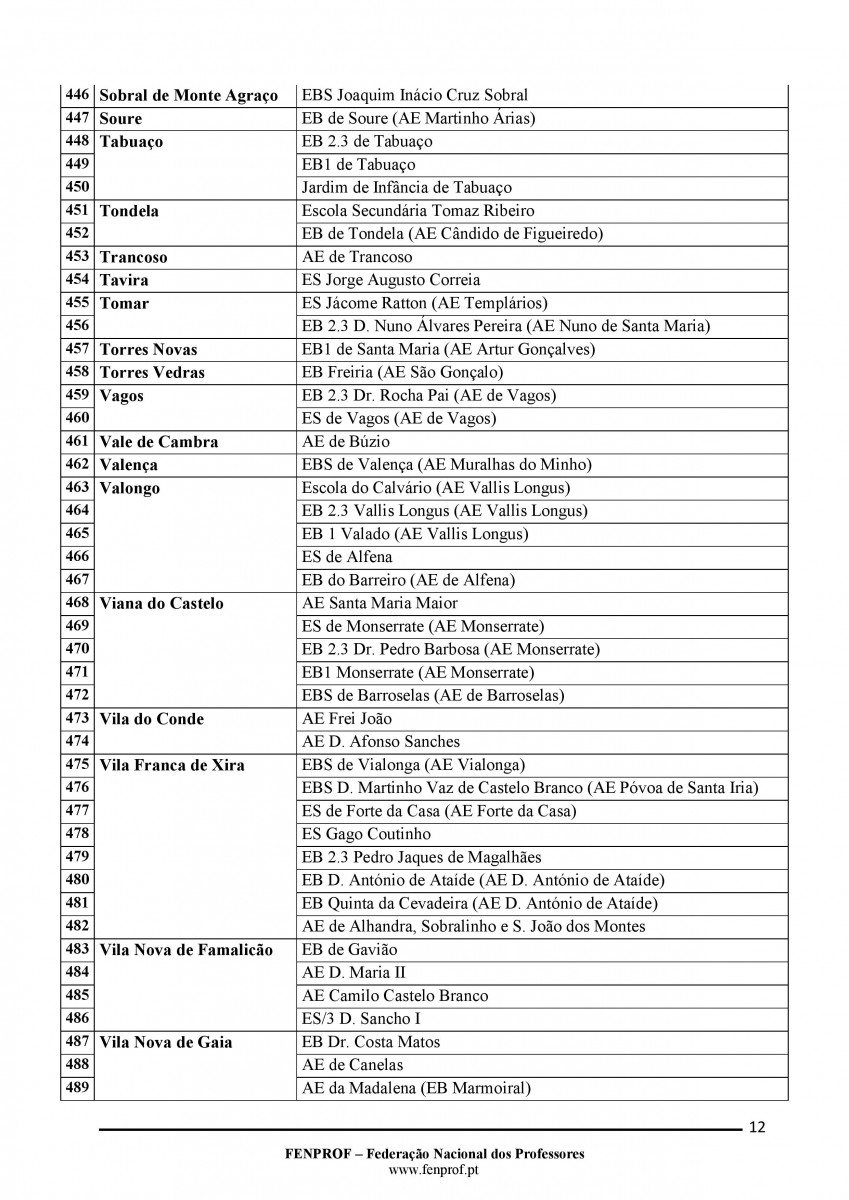
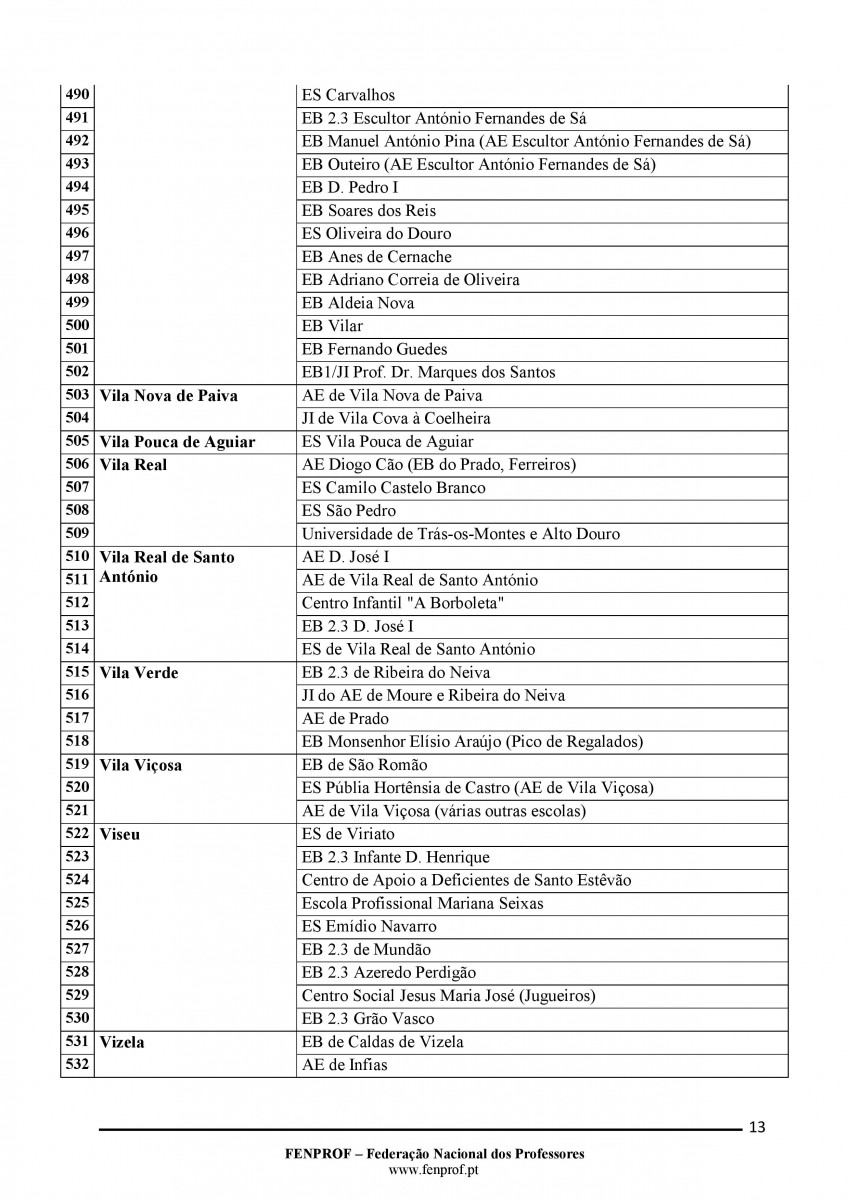
A Federação Nacional dos Professores (FENPROF) divulgou, esta segunda-feira, uma listagem atualizada dos estabelecimento de ensino no país com casos Covid-19.
O presidente da Associação Feiras e Mercados da Região Norte (AFMRN) disse hoje à Lusa que “a grande maioria” das câmaras vai permitir a realização de feiras, agora que o Governo recuou na sua decisão de proibição.
Embora desconheça o número exato de autarquias que vão autorizar a realização de feiras, Fernando Sá citou como exemplo as autarquias do Vale do Sousa, nomeadamente Lousada, Paços de Ferreira e Felgueiras (onde foram antecipadas medidas mais restritivas para conter a epidemia de covid-19, devido ao elevado número de casos), mas também Guimarães, Gondomar, Caminha e Espinho.
“Esperamos que esta decisão se mantenha, caso seja decretado o estado de emergência”, sublinhou.
Congratulando-se com o recuo do Governo nesta matéria, ao remeter para as autarquias a decisão de autorizar ou não a realização de feiras, o dirigente da AFMRN lamentou, contudo, que a palavra “proibição” se mantenha na medida anunciada no sábado, no final do concelho de ministros.
“Gostaríamos é que não estivesse a palavra proibição nesta medida, porque isso dá sempre margem de manobra para algumas autarquias que não estão interessadas na realização das feiras locais, o que nos não compreendemos”, disse, apontando os casos das câmaras do Porto e de Vila Nova de Foz Coa.
Segundo o responsável, “nestes dois municípios, desde que foram encerradas em março, as feiras nunca mais reabriram”, mesmo depois de o Governo em maio o ter permitido, desde que fossem implementados os planos de contingência.
“Não entendemos que razões possam existir para que as feiras não se realizem”, afirmou, referindo ter assistido “nos últimos dias”, a discursos “curiosos” como o do presidente da Câmara de Vizela que justificou a suspensão das feiras locais “com o argumento de que os feirantes andam de terra em terra” o que, no entender do autarca, poderia potenciar a transmissão do vírus.
Para Fernando Sá, esta é “uma opinião muito descabida, sem senso nenhum”.
“Basta fazermos a comparação com os transportes públicos” que fazem a ligação entre cidades, observou.
O responsável entende que “se a decisão do Governo não fosse revertida, esta atividade poderia falir e, assim, perder-se um setor histórico, cultural e tradicional”.
“Iríamos tentar, de todas as formas, que isso não acontecesse”, afirmou, admitindo, até, a criação de um partido político “para salvaguardar esta e outras classes do mesmo ramo tradicional”.
Segundo contou à Lusa, “não se avançou com nada, mas a ideia mantém-se”.
Fernando Sá reafirmou ainda que “os feirantes, tal como os supermercados e os hipermercados, vendem produtos essenciais, pelo que devem ser contemplados com medidas iguais”.
A Associação de Feiras e Mercados da Região Norte representa cerca de 8.000 feirantes.
A associação alerta que “se os feirantes não trabalham, não têm como gerar rendimentos para as suas mais elementares necessidades, como comer ou pagar as contas da água e da luz”, e que “se os feirantes não podem trabalhar, todos os fornecedores desses feirantes, a montante, deixarão de ter a quem vender e todos ficarão sem rendimento”.
Segundo despacho do presidente da Câmara Municipal, Paulo Cunha, as feiras e mercados de levante realizados em Joane, Landim, Oliveira S. Mateus e Riba de Ave, também se podem realizar, desde que verificadas as condições de segurança e o cumprimento das orientações definidas pela Direção-Geral da Saúde, designadamente a existência de um Plano de Contingência devidamente divulgado.
Nestas feiras e mercados a fiscalização do cumprimento das regras de funcionamento compete, em primeira instância, à GNR e à Polícia Municipal.
Os presidentes de Junta de Freguesia devem solicitar a estas forças de segurança o reforço do dispositivo de prevenção e fiscalização da utilização de máscara no espaço público, do distanciamento social e demais medidas de segurança definidas quer no Plano de Contingência, quer nas orientações da Direção-Geral de Saúde
Últimas Noticias
Concelho
Cookie Consent
We and our [number_of_vendors] partners use cookies and other tracking technologies to store and access information on your device and to process your personal data.
With your consent, we and our partners may process personal data such as unique identifiers, browsing data, and precise geolocation data, including through device scanning. You can accept or reject all by clicking the buttons below, or customize your choices by clicking "Manage Settings".
Some of our partners process your data based on their legitimate interest. You have the right to object to this processing. You can manage these settings by clicking "Manage Settings" and reviewing the legitimate interest options for each purpose and vendor.
This consent applies to this website only. You can withdraw or change your consent at any time by clicking the floating "Cookie Preferences" button at the bottom-left corner of your screen.
Data Processing Purposes: Store and/or access information on a device (397 seeking consent); Use limited data to select advertising (278 seeking consent, 96 using legitimate interest); Create profiles for personalised advertising (293 seeking consent); Use profiles to select personalised advertising (299 seeking consent); Create profiles to personalise content (114 seeking consent); Use profiles to select personalised content (107 seeking consent); Measure advertising performance (301 seeking consent, 131 using legitimate interest); Measure content performance (139 seeking consent, 55 using legitimate interest); Understand audiences through statistics or combinations of data from different sources (199 seeking consent, 67 using legitimate interest); Develop and improve services (200 seeking consent, 107 using legitimate interest); Use limited data to select content (62 seeking consent, 22 using legitimate interest)
Special Features: Use precise geolocation data; Identify devices based on information actively requested
Review and customize your consent choices for purposes and vendors. You can grant or withdraw consent for each purpose and vendor individually, or use the buttons below to accept or reject all.
The choices you make regarding the purposes and entities listed in this notice are saved in your browser's localStorage and a cookie named "wpconsent_tcstring" for a maximum duration of 12 months.
Non-IAB TCF Categories
These categories are not part of the IAB Transparency & Consent Framework.
Essential cookies enable basic functions and are necessary for the proper function of the website.
Name
Description
Duration
IAB TC String
This cookie stores the IAB Transparency & Consent Framework consent string, recording the user's choices for IAB TCF purposes and vendors.
12 months
Cookie Preferences
This cookie is used to store the user's cookie consent preferences.
30 days
IAB TCF Purposes
These purposes are part of the IAB Transparency & Consent Framework.
Store and/or access information on a device (397 seeking consent)
Cookies, device or similar online identifiers (e.g. login-based identifiers, randomly assigned identifiers, network based identifiers) together with other information (e.g. browser type and information, language, screen size, supported technologies etc.) can be stored or read on your device to recognise it each time it connects to an app or to a website, for one or several of the purposes presented here.
Examples:
Most purposes explained in this notice rely on the storage or accessing of information from your device when you use an app or visit a website. For example, a vendor or publisher might need to store a cookie on your device during your first visit on a website, to be able to recognise your device during your next visits (by accessing this cookie each time).
Use limited data to select advertising (278 seeking consent, 96 using legitimate interest)
Advertising presented to you on this service can be based on limited data, such as the website or app you are using, your non-precise location, your device type or which content you are (or have been) interacting with (for example, to limit the number of times an ad is presented to you).
Examples:
A car manufacturer wants to promote its electric vehicles to environmentally conscious users living in the city after office hours. The advertising is presented on a page with related content (such as an article on climate change actions) after 6:30 p.m. to users whose non-precise location suggests that they are in an urban zone.
A large producer of watercolour paints wants to carry out an online advertising campaign for its latest watercolour range, diversifying its audience to reach as many amateur and professional artists as possible and avoiding showing the ad next to mismatched content (for instance, articles about how to paint your house). The number of times that the ad has been presented to you is detected and limited, to avoid presenting it too often.
Create profiles for personalised advertising (293 seeking consent)
Information about your activity on this service (such as forms you submit, content you look at) can be stored and combined with other information about you (for example, information from your previous activity on this service and other websites or apps) or similar users. This is then used to build or improve a profile about you (that might include possible interests and personal aspects). Your profile can be used (also later) to present advertising that appears more relevant based on your possible interests by this and other entities.
Examples:
If you read several articles about the best bike accessories to buy, this information could be used to create a profile about your interest in bike accessories. Such a profile may be used or improved later on, on the same or a different website or app to present you with advertising for a particular bike accessory brand. If you also look at a configurator for a vehicle on a luxury car manufacturer website, this information could be combined with your interest in bikes to refine your profile and make an assumption that you are interested in luxury cycling gear.
An apparel company wishes to promote its new line of high-end baby clothes. It gets in touch with an agency that has a network of clients with high income customers (such as high-end supermarkets) and asks the agency to create profiles of young parents or couples who can be assumed to be wealthy and to have a new child, so that these can later be used to present advertising within partner apps based on those profiles.
Use profiles to select personalised advertising (299 seeking consent)
Advertising presented to you on this service can be based on your advertising profiles, which can reflect your activity on this service or other websites or apps (like the forms you submit, content you look at), possible interests and personal aspects.
Examples:
An online retailer wants to advertise a limited sale on running shoes. It wants to target advertising to users who previously looked at running shoes on its mobile app. Tracking technologies might be used to recognise that you have previously used the mobile app to consult running shoes, in order to present you with the corresponding advertisement on the app.
A profile created for personalised advertising in relation to a person having searched for bike accessories on a website can be used to present the relevant advertisement for bike accessories on a mobile app of another organisation.
Create profiles to personalise content (114 seeking consent)
Information about your activity on this service (for instance, forms you submit, non-advertising content you look at) can be stored and combined with other information about you (such as your previous activity on this service or other websites or apps) or similar users. This is then used to build or improve a profile about you (which might for example include possible interests and personal aspects). Your profile can be used (also later) to present content that appears more relevant based on your possible interests, such as by adapting the order in which content is shown to you, so that it is even easier for you to find content that matches your interests.
Examples:
You read several articles on how to build a treehouse on a social media platform. This information might be added to a profile to mark your interest in content related to outdoors as well as do-it-yourself guides (with the objective of allowing the personalisation of content, so that for example you are presented with more blog posts and articles on treehouses and wood cabins in the future).
You have viewed three videos on space exploration across different TV apps. An unrelated news platform with which you have had no contact builds a profile based on that viewing behaviour, marking space exploration as a topic of possible interest for other videos.
Use profiles to select personalised content (107 seeking consent)
Content presented to you on this service can be based on your content personalisation profiles, which can reflect your activity on this or other services (for instance, the forms you submit, content you look at), possible interests and personal aspects. This can for example be used to adapt the order in which content is shown to you, so that it is even easier for you to find (non-advertising) content that matches your interests.
Examples:
You read articles on vegetarian food on a social media platform and then use the cooking app of an unrelated company. The profile built about you on the social media platform will be used to present you vegetarian recipes on the welcome screen of the cooking app.
You have viewed three videos about rowing across different websites. An unrelated video sharing platform will recommend five other videos on rowing that may be of interest to you when you use your TV app, based on a profile built about you when you visited those different websites to watch online videos.
Measure advertising performance (301 seeking consent, 131 using legitimate interest)
Information regarding which advertising is presented to you and how you interact with it can be used to determine how well an advert has worked for you or other users and whether the goals of the advertising were reached. For instance, whether you saw an ad, whether you clicked on it, whether it led you to buy a product or visit a website, etc. This is very helpful to understand the relevance of advertising campaigns.
Examples:
You have clicked on an advertisement about a “black Friday” discount by an online shop on the website of a publisher and purchased a product. Your click will be linked to this purchase. Your interaction and that of other users will be measured to know how many clicks on the ad led to a purchase.
You are one of very few to have clicked on an advertisement about an “international appreciation day” discount by an online gift shop within the app of a publisher. The publisher wants to have reports to understand how often a specific ad placement within the app, and notably the “international appreciation day” ad, has been viewed or clicked by you and other users, in order to help the publisher and its partners (such as agencies) optimise ad placements.
Measure content performance (139 seeking consent, 55 using legitimate interest)
Information regarding which content is presented to you and how you interact with it can be used to determine whether the (non-advertising) content e.g. reached its intended audience and matched your interests. For instance, whether you read an article, watch a video, listen to a podcast or look at a product description, how long you spent on this service and the web pages you visit etc. This is very helpful to understand the relevance of (non-advertising) content that is shown to you.
Examples:
You have read a blog post about hiking on a mobile app of a publisher and followed a link to a recommended and related post. Your interactions will be recorded as showing that the initial hiking post was useful to you and that it was successful in interesting you in the related post. This will be measured to know whether to produce more posts on hiking in the future and where to place them on the home screen of the mobile app.
You were presented a video on fashion trends, but you and several other users stopped watching after 30 seconds. This information is then used to evaluate the right length of future videos on fashion trends.
Understand audiences through statistics or combinations of data from different sources (199 seeking consent, 67 using legitimate interest)
Reports can be generated based on the combination of data sets (like user profiles, statistics, market research, analytics data) regarding your interactions and those of other users with advertising or (non-advertising) content to identify common characteristics (for instance, to determine which target audiences are more receptive to an ad campaign or to certain contents).
Examples:
The owner of an online bookstore wants commercial reporting showing the proportion of visitors who consulted and left its site without buying, or consulted and bought the last celebrity autobiography of the month, as well as the average age and the male/female distribution of each category. Data relating to your navigation on its site and to your personal characteristics is then used and combined with other such data to produce these statistics.
An advertiser wants to better understand the type of audience interacting with its adverts. It calls upon a research institute to compare the characteristics of users who interacted with the ad with typical attributes of users of similar platforms, across different devices. This comparison reveals to the advertiser that its ad audience is mainly accessing the adverts through mobile devices and is likely in the 45-60 age range.
Develop and improve services (200 seeking consent, 107 using legitimate interest)
Information about your activity on this service, such as your interaction with ads or content, can be very helpful to improve products and services and to build new products and services based on user interactions, the type of audience, etc. This specific purpose does not include the development or improvement of user profiles and identifiers.
Examples:
A technology platform working with a social media provider notices a growth in mobile app users, and sees based on their profiles that many of them are connecting through mobile connections. It uses a new technology to deliver ads that are formatted for mobile devices and that are low-bandwidth, to improve their performance.
An advertiser is looking for a way to display ads on a new type of consumer device. It collects information regarding the way users interact with this new kind of device to determine whether it can build a new mechanism for displaying advertising on this type of device.
Use limited data to select content (62 seeking consent, 22 using legitimate interest)
Content presented to you on this service can be based on limited data, such as the website or app you are using, your non-precise location, your device type, or which content you are (or have been) interacting with (for example, to limit the number of times a video or an article is presented to you).
Examples:
A travel magazine has published an article on its website about the new online courses proposed by a language school, to improve travelling experiences abroad. The school’s blog posts are inserted directly at the bottom of the page, and selected on the basis of your non-precise location (for instance, blog posts explaining the course curriculum for different languages than the language of the country you are situated in).
A sports news mobile app has started a new section of articles covering the most recent football games. Each article includes videos hosted by a separate streaming platform showcasing the highlights of each match. If you fast-forward a video, this information may be used to select a shorter video to play next.