Um camionista de Braga de 24 anos morreu, esta terça-feira, na sequência de uma colisão frontal entre dois camiões, na estrada nacional N-II, no município espanhol de Pina de Ebro, Saragoça.
De acordo com o jornal espanhol Heraldo, o acidente aconteceu cerca da meia-noite e meia (hora local), quando dois pesados de mercadorias colidiram ao quilómetro 362.
Ambas as vítimas foram desencarceradas pelos bombeiros de Saragoça, que acorreram ao local juntamente com a Guardia Civil.
O condutor de Braga, que transportava uma carga de rolos, guardanapos e lenços de papel, morreu imediatamente, tendo os bombeiros de Saragoça retirado o cadáver que estava encarcerado na cabine de condução.
O outro condutor, de um camião frigorífico que caiu para um dos lados, ficou gravemente ferido e foi resgatado pelos bombeiros também do interior da cabine.
Está aí mais uma edição do Frame It, o Laboratório de Formação e Criação Artística promovido pela Casa da Juventude de Vila Nova de Famalicão que pretende unir duas ou mais artes num projeto experimental inovador para os jovens entre os 12 e os 35 anos.
Este ano o projeto vai combinar técnicas de video mapping interativo com percussão não convencional e os interessados podem já efetuar inscrição no portal online da Juventude de Famalicão, em www.juventudefamalicao.org.
Agendadas estão já as duas formações nestas áreas, com a primeira sessão a decorrer a 16 de junho. A formação de video mapping será orientada pelo artista colombiano Daniel Escobar Vásquez, sendo que a de percussão não convencional será orientada pelo percussionista espanhol Miquel Bernat.
O resultado final deste laboratório poderá ser visto no dia 14 de julho, às 21h30, no Parque da Juventude, com um espetáculo visual e sonoro, onde as batidas da percurssão projetam imagens num edifício e/ou fachada. Uma narrativa não-verbal, social e culturalmente interventiva, espelho das transformações sociais e culturais da nossa sociedade.
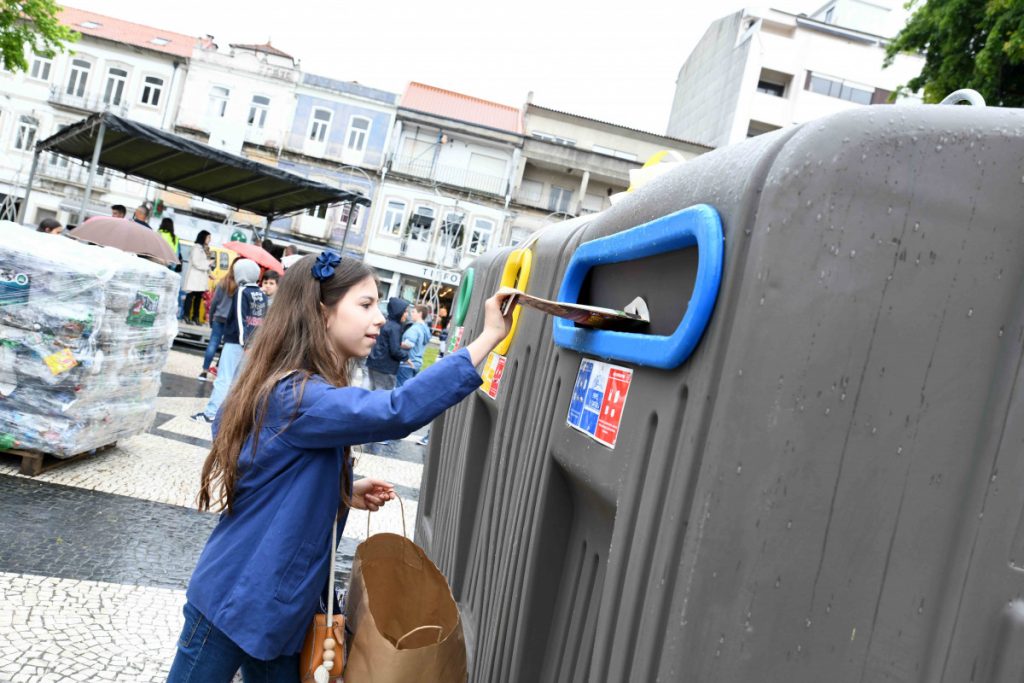
O município de Vila Nova de Famalicão vai avançar em breve com um projeto piloto de recolha seletiva porta-a-porta com o objetivo de aumentar significativamente a quantidade dos resíduos enviados para reciclagem no concelho. A novidade foi avançada, esta terça-feira, Dia Mundial do Ambiente, pelo presidente da Câmara Municipal, Paulo Cunha, durante uma ação de sensibilização promovida pela Resinorte a duas turmas de alunos da Escola Júlio Brandão, na Praça D. Maria II.
“Acreditamos e os estudos confirmam que através do sistema de recolha porta a porta, os cidadãos estão mais recetivos, colaborando mais e responsabilizando-se mais com o ambiente, melhorando a eficiência da reciclagem”, adiantou Paulo Cunha, afirmando que “a autarquia está empenhada em consciencializar os cidadãos para a necessidade de reciclar cada vez mais”.
Neste sentido, o autarca anunciou ainda a colocação de mais de centena e meia de ecopontos no concelho de forma “a reforçar esta aposta na reciclagem”.
O projeto piloto da recolha porta a porta irá arrancar na vila de Riba de Ave, a partir do mês de setembro, com a recolha aos três fluxos dos ecopontos (papel, embalagens e vidro), nas habitações, em dias da semana e com horários pré-definidos. Prevê-se que depois seja alargado a outros núcleos do concelho, podendo ainda a recolha ser estendida aos resíduos urbanos biodegradáveis.
Por sua vez, os ecopontos começam a ser distribuídos durante este mês de junho, com cerca de duas dezenas a serem colocados na cidade, e os restantes a serem distribuídos pelas freguesias.
Entretanto, a autarquia tem já em funcionamento do projeto de recolha escola a escola abrangendo 93 escolas públicas.
De acordo, com os dados fornecidos pela Resinorte que é a entidade responsável pelo tratamento e valorização dos Resíduos Sólidos Urbanos produzidos em Vila Nova de Famalicão, cada famalicense recolheu, em 2017, cerca de 53 quilos de resíduos, através dos ecopontos.
“Nós queremos que as pessoas produzam menos lixo, que cada um de nós reduza a quantidade de lixo que produz, mas que acima de tudo, que o lixo que produzimos seja corretamente separado e reciclado”, sublinhou ainda Paulo Cunha.
“Estamos a trabalhar com as autarquias para que a tarifa solidária seja uma realidade este ano. Há várias empresas que já mostraram interesse em participar. Estão elas próprias disponíveis para suportar a tarifa solidária. É algo que concretizaremos este ano, seguramente”, afirmou o governante, em resposta ao deputado socialista Hugo Costa.
Em setembro do ano passado, o PS admitiu criar no país uma tarifa social para o gás de botija, à semelhança do que existe atualmente para os consumidores economicamente vulneráveis da eletricidade e do gás natural. Mais tarde, em outubro de 2017, o secretário de Estado da Energia anunciou que a botija de gás social, dedicada às famílias economicamente vulneráveis, iria avançar este ano através de um projeto-piloto, em parceria com a petrolífera espanhola Cepsa.
Esta rede de distribuição do gás solidário terá de ser equacionada juntamente com as autarquias, isto é, terá de ser projetada à margem da tradicional rede de distribuição, enquanto os critérios de atribuição deverão ser semelhantes aos da tarifa social da luz e do gás natural, que atualmente beneficiam cerca de 840 mil famílias.
Entretanto, no final de maio, a Cepsa disse estar à espera de aval do Governo para arrancar com o projeto-piloto da botija de gás social, mas espera que a medida avance este ano, a um preço que rondará os 18 euros por garrafa.
“Nós estamos preparados para começar. Temos os sistemas, já comercializamos a botija em Portugal e estamos à espera que o Governo finalize os detalhes administrativos do projeto”, disse à Lusa o presidente da Cepsa em Portugal, Álvaro Díaz Bild.
Jorge Seguro Sanches está a ser ouvido na Comissão de Economia, Inovação e Obras Públicas, na sequência de requerimentos de vários partidos, sobre rendas no setor elétrico, gás de botija e interligações no setor.
A Raclac, empresa participada pelo grupo Vallis Capital Partners especialista no fabrico de produtos descartáveis para as áreas médica e industrial, vai investir 20 milhões de euros naquela que será a primeira fábrica da Europa de luvas de exame.
A nova fábrica está inserida no projeto NITRO, que materializa a criação de uma linha de produção de luvas de exame. O projeto, que a empresa classifica como “inovador” e “vanguardista”, vai ver lançada a primeira pedra esta sexta-feira, em Famalicão, com a presença da secretária de Estado da Indústria, Ana Teresa Lehmann, e do presidente da Câmara, Paulo Cunha.
Com este projeto, a Raclac, empresa com sede em Vila Nova de Famalicão,assume-se como a primeira empresa europeia a fabricar luvas de exame e a única empresa a nível mundial a utilizar este conceito de produção desenvolvido.
O projeto NITRO, com um investimento global de 20 milhões de euros, teve um custo total projetado e submetido ao Programa Compete 2020 de 13,9 milhões de euros, dos quais 5,5 milhões serão financiados pelo FEDER.
A nova linha de produção tem como elemento diferenciador o facto de ser a única no mundo 100% automatizada na produção. Ainda como elemento diferenciador encontra-se o fabrico de luvas em sala limpa e a diferenciação da embalagem.
Em comunicado, a empresa esclarece que “a competitividade assentará igualmente na eliminação dos direitos aduaneiros pagos aquando da importação destes produto; a anulação dos custos tomados pelo transporte marítimo da Ásia para a Europa, e na redução do tempo necessário para a colocação do produto no mercado europeu e demais países envolvidos”.
A Raclac, cujo volume de faturação ultrapassou os 10,5 milhões de euros, em 2017, um crescimento de 30% face ao ano anterior, emprega cerca de 14 profissionais e está presente em mercados como Espanha, França, Inglaterra, Angola, Moçambique, Marrocos, Tunísia e Cabo Verde.
O grupo Vallis adquiriu 50% do capital da Raclac, em 2016, tendo os restantes 50% ficado nas mãos dos fundadores da empresa. A Raclac é, desde essa altura, uma das empresas selecionadas para fornecimento de produtos estéreis para o setor público hospitalar.
O projeto GIVE – Grupo Interpares Voluntário de Estudo, surge no Agrupamento de Escolas Camilo Castelo Branco, através de um repto lançado pela Associação de Pais e Encarregados de Educação da Escola Secundária Camilo Castelo Branco, no sentido de se desenvolver um grupo de estudo interpares, o que veio ao encontro da intenção da direção do Agrupamento, de que as ofertas educativas aos alunos de 5º ano fossem alargadas para além do currículo.
Deste modo, surge o projeto GIVE que assenta em três princípios fundamentais: diversificar as estratégias de apoio ao estudo, promover o mérito académico dos alunos e fomentar laços de solidariedade e de partilha.
Sabendo que o grupo de pares exerce uma forte influência sobre as crianças e jovens, pretende-se que alunos do 11º e 12º anos apoiem, em regime de voluntariado, colegas do 5º ano. Este apoio ao estudo será facilitado pela relação horizontal, ao nível da linguagem, dos interesses e das vivências que são comuns.
Neste momento, o projeto conta com 24 voluntários e 23 alunos de 5º ano a serem apoiados em períodos de 45 ou 90 minutos semanais.
Durante as sessões, os alunos voluntários procuram apoiar as necessidades individuais de cada aluno, ajudando-os em pesquisas na internet, organização do estudo, realização de resumos das matérias dadas e procurando esclarecer as suas dúvidas ou orientando-os para tal. As sessões são individuais ou, no máximo, com dois alunos da mesma turma.
A coordenação deste projeto tem sido bastante gratificante. Salientar o apoio e colaboração da Biblioteca da escola sede, onde se realizam as sessões. Assistir ao processo de partilha de conhecimentos, ideias, atitudes e valores entre estes jovens tem sido um privilégio. Esta estratégia continuará a ser uma aposta do agrupamento, uma vez que os pares são um recurso humano inestimável.
We and our [number_of_vendors] partners use cookies and other tracking technologies to store and access information on your device and to process your personal data.
With your consent, we and our partners may process personal data such as unique identifiers, browsing data, and precise geolocation data, including through device scanning. You can accept or reject all by clicking the buttons below, or customize your choices by clicking "Manage Settings".
Some of our partners process your data based on their legitimate interest. You have the right to object to this processing. You can manage these settings by clicking "Manage Settings" and reviewing the legitimate interest options for each purpose and vendor.
This consent applies to this website only. You can withdraw or change your consent at any time by clicking the floating "Cookie Preferences" button at the bottom-left corner of your screen.
Data Processing Purposes: Store and/or access information on a device (397 seeking consent); Use limited data to select advertising (278 seeking consent, 96 using legitimate interest); Create profiles for personalised advertising (294 seeking consent); Use profiles to select personalised advertising (300 seeking consent); Create profiles to personalise content (114 seeking consent); Use profiles to select personalised content (107 seeking consent); Measure advertising performance (300 seeking consent, 132 using legitimate interest); Measure content performance (138 seeking consent, 56 using legitimate interest); Understand audiences through statistics or combinations of data from different sources (198 seeking consent, 67 using legitimate interest); Develop and improve services (200 seeking consent, 107 using legitimate interest); Use limited data to select content (62 seeking consent, 22 using legitimate interest)
Special Features: Use precise geolocation data; Identify devices based on information actively requested
Review and customize your consent choices for purposes and vendors. You can grant or withdraw consent for each purpose and vendor individually, or use the buttons below to accept or reject all.
The choices you make regarding the purposes and entities listed in this notice are saved in your browser's localStorage and a cookie named "wpconsent_tcstring" for a maximum duration of 12 months.
Non-IAB TCF Categories
These categories are not part of the IAB Transparency & Consent Framework.
Essential cookies enable basic functions and are necessary for the proper function of the website.
Name
Description
Duration
IAB TC String
This cookie stores the IAB Transparency & Consent Framework consent string, recording the user's choices for IAB TCF purposes and vendors.
12 months
Cookie Preferences
This cookie is used to store the user's cookie consent preferences.
30 days
IAB TCF Purposes
These purposes are part of the IAB Transparency & Consent Framework.
Store and/or access information on a device (397 seeking consent)
Cookies, device or similar online identifiers (e.g. login-based identifiers, randomly assigned identifiers, network based identifiers) together with other information (e.g. browser type and information, language, screen size, supported technologies etc.) can be stored or read on your device to recognise it each time it connects to an app or to a website, for one or several of the purposes presented here.
Examples:
Most purposes explained in this notice rely on the storage or accessing of information from your device when you use an app or visit a website. For example, a vendor or publisher might need to store a cookie on your device during your first visit on a website, to be able to recognise your device during your next visits (by accessing this cookie each time).
Use limited data to select advertising (278 seeking consent, 96 using legitimate interest)
Advertising presented to you on this service can be based on limited data, such as the website or app you are using, your non-precise location, your device type or which content you are (or have been) interacting with (for example, to limit the number of times an ad is presented to you).
Examples:
A car manufacturer wants to promote its electric vehicles to environmentally conscious users living in the city after office hours. The advertising is presented on a page with related content (such as an article on climate change actions) after 6:30 p.m. to users whose non-precise location suggests that they are in an urban zone.
A large producer of watercolour paints wants to carry out an online advertising campaign for its latest watercolour range, diversifying its audience to reach as many amateur and professional artists as possible and avoiding showing the ad next to mismatched content (for instance, articles about how to paint your house). The number of times that the ad has been presented to you is detected and limited, to avoid presenting it too often.
Create profiles for personalised advertising (294 seeking consent)
Information about your activity on this service (such as forms you submit, content you look at) can be stored and combined with other information about you (for example, information from your previous activity on this service and other websites or apps) or similar users. This is then used to build or improve a profile about you (that might include possible interests and personal aspects). Your profile can be used (also later) to present advertising that appears more relevant based on your possible interests by this and other entities.
Examples:
If you read several articles about the best bike accessories to buy, this information could be used to create a profile about your interest in bike accessories. Such a profile may be used or improved later on, on the same or a different website or app to present you with advertising for a particular bike accessory brand. If you also look at a configurator for a vehicle on a luxury car manufacturer website, this information could be combined with your interest in bikes to refine your profile and make an assumption that you are interested in luxury cycling gear.
An apparel company wishes to promote its new line of high-end baby clothes. It gets in touch with an agency that has a network of clients with high income customers (such as high-end supermarkets) and asks the agency to create profiles of young parents or couples who can be assumed to be wealthy and to have a new child, so that these can later be used to present advertising within partner apps based on those profiles.
Use profiles to select personalised advertising (300 seeking consent)
Advertising presented to you on this service can be based on your advertising profiles, which can reflect your activity on this service or other websites or apps (like the forms you submit, content you look at), possible interests and personal aspects.
Examples:
An online retailer wants to advertise a limited sale on running shoes. It wants to target advertising to users who previously looked at running shoes on its mobile app. Tracking technologies might be used to recognise that you have previously used the mobile app to consult running shoes, in order to present you with the corresponding advertisement on the app.
A profile created for personalised advertising in relation to a person having searched for bike accessories on a website can be used to present the relevant advertisement for bike accessories on a mobile app of another organisation.
Create profiles to personalise content (114 seeking consent)
Information about your activity on this service (for instance, forms you submit, non-advertising content you look at) can be stored and combined with other information about you (such as your previous activity on this service or other websites or apps) or similar users. This is then used to build or improve a profile about you (which might for example include possible interests and personal aspects). Your profile can be used (also later) to present content that appears more relevant based on your possible interests, such as by adapting the order in which content is shown to you, so that it is even easier for you to find content that matches your interests.
Examples:
You read several articles on how to build a treehouse on a social media platform. This information might be added to a profile to mark your interest in content related to outdoors as well as do-it-yourself guides (with the objective of allowing the personalisation of content, so that for example you are presented with more blog posts and articles on treehouses and wood cabins in the future).
You have viewed three videos on space exploration across different TV apps. An unrelated news platform with which you have had no contact builds a profile based on that viewing behaviour, marking space exploration as a topic of possible interest for other videos.
Use profiles to select personalised content (107 seeking consent)
Content presented to you on this service can be based on your content personalisation profiles, which can reflect your activity on this or other services (for instance, the forms you submit, content you look at), possible interests and personal aspects. This can for example be used to adapt the order in which content is shown to you, so that it is even easier for you to find (non-advertising) content that matches your interests.
Examples:
You read articles on vegetarian food on a social media platform and then use the cooking app of an unrelated company. The profile built about you on the social media platform will be used to present you vegetarian recipes on the welcome screen of the cooking app.
You have viewed three videos about rowing across different websites. An unrelated video sharing platform will recommend five other videos on rowing that may be of interest to you when you use your TV app, based on a profile built about you when you visited those different websites to watch online videos.
Measure advertising performance (300 seeking consent, 132 using legitimate interest)
Information regarding which advertising is presented to you and how you interact with it can be used to determine how well an advert has worked for you or other users and whether the goals of the advertising were reached. For instance, whether you saw an ad, whether you clicked on it, whether it led you to buy a product or visit a website, etc. This is very helpful to understand the relevance of advertising campaigns.
Examples:
You have clicked on an advertisement about a “black Friday” discount by an online shop on the website of a publisher and purchased a product. Your click will be linked to this purchase. Your interaction and that of other users will be measured to know how many clicks on the ad led to a purchase.
You are one of very few to have clicked on an advertisement about an “international appreciation day” discount by an online gift shop within the app of a publisher. The publisher wants to have reports to understand how often a specific ad placement within the app, and notably the “international appreciation day” ad, has been viewed or clicked by you and other users, in order to help the publisher and its partners (such as agencies) optimise ad placements.
Measure content performance (138 seeking consent, 56 using legitimate interest)
Information regarding which content is presented to you and how you interact with it can be used to determine whether the (non-advertising) content e.g. reached its intended audience and matched your interests. For instance, whether you read an article, watch a video, listen to a podcast or look at a product description, how long you spent on this service and the web pages you visit etc. This is very helpful to understand the relevance of (non-advertising) content that is shown to you.
Examples:
You have read a blog post about hiking on a mobile app of a publisher and followed a link to a recommended and related post. Your interactions will be recorded as showing that the initial hiking post was useful to you and that it was successful in interesting you in the related post. This will be measured to know whether to produce more posts on hiking in the future and where to place them on the home screen of the mobile app.
You were presented a video on fashion trends, but you and several other users stopped watching after 30 seconds. This information is then used to evaluate the right length of future videos on fashion trends.
Understand audiences through statistics or combinations of data from different sources (198 seeking consent, 67 using legitimate interest)
Reports can be generated based on the combination of data sets (like user profiles, statistics, market research, analytics data) regarding your interactions and those of other users with advertising or (non-advertising) content to identify common characteristics (for instance, to determine which target audiences are more receptive to an ad campaign or to certain contents).
Examples:
The owner of an online bookstore wants commercial reporting showing the proportion of visitors who consulted and left its site without buying, or consulted and bought the last celebrity autobiography of the month, as well as the average age and the male/female distribution of each category. Data relating to your navigation on its site and to your personal characteristics is then used and combined with other such data to produce these statistics.
An advertiser wants to better understand the type of audience interacting with its adverts. It calls upon a research institute to compare the characteristics of users who interacted with the ad with typical attributes of users of similar platforms, across different devices. This comparison reveals to the advertiser that its ad audience is mainly accessing the adverts through mobile devices and is likely in the 45-60 age range.
Develop and improve services (200 seeking consent, 107 using legitimate interest)
Information about your activity on this service, such as your interaction with ads or content, can be very helpful to improve products and services and to build new products and services based on user interactions, the type of audience, etc. This specific purpose does not include the development or improvement of user profiles and identifiers.
Examples:
A technology platform working with a social media provider notices a growth in mobile app users, and sees based on their profiles that many of them are connecting through mobile connections. It uses a new technology to deliver ads that are formatted for mobile devices and that are low-bandwidth, to improve their performance.
An advertiser is looking for a way to display ads on a new type of consumer device. It collects information regarding the way users interact with this new kind of device to determine whether it can build a new mechanism for displaying advertising on this type of device.
Use limited data to select content (62 seeking consent, 22 using legitimate interest)
Content presented to you on this service can be based on limited data, such as the website or app you are using, your non-precise location, your device type, or which content you are (or have been) interacting with (for example, to limit the number of times a video or an article is presented to you).
Examples:
A travel magazine has published an article on its website about the new online courses proposed by a language school, to improve travelling experiences abroad. The school’s blog posts are inserted directly at the bottom of the page, and selected on the basis of your non-precise location (for instance, blog posts explaining the course curriculum for different languages than the language of the country you are situated in).
A sports news mobile app has started a new section of articles covering the most recent football games. Each article includes videos hosted by a separate streaming platform showcasing the highlights of each match. If you fast-forward a video, this information may be used to select a shorter video to play next.








 “Acreditamos e os estudos confirmam que através do sistema de recolha porta a porta, os cidadãos estão mais recetivos, colaborando mais e responsabilizando-se mais com o ambiente, melhorando a eficiência da reciclagem”, adiantou Paulo Cunha, afirmando que “a autarquia está empenhada em consciencializar os cidadãos para a necessidade de reciclar cada vez mais”.