No dia 22 de maio, pelas 22H30, na cidade de Vila Nova de Famalicão, na Rua Marechal Humberto Delgado, a PSP procedeu à detenção de um cidadão com 53 anos de idade, por tráfico de estupefaciente.
O suspeito foi intercetado na posse de heroína suficiente para 120 doses, que lhe foi apreendida, bem como a quantia de 20,00€ em dinheiro.
Na sequência da detenção, foi efetuada uma busca domiciliária, tendo-lhe sido apreendido diverso material utilizado no corte e acondicionamento do estupefaciente, dois telemóveis e uma agenda. O detido foi presente, nos Serviços do Ministério Público junto do Tribunal Judicial de Vila Nova de Famalicão.
Uma colagem com a imagem do General De Gaulle com intenções claramente provocatórias da autoria de Mário Cesariny, uma escultura com caixa de vidro que representa o “Mar Português” de Cruzeiro Seixas ou ainda “O Tríptico A Vida”, de António Carneiro, são apenas três exemplos das mais de três mil obras ligadas ao surrealismo português que integram a coleção da Fundação Cupertino de Miranda, e que a partir do dia 1 de junho vão estar patentes ao público de uma forma rotativa no Centro Português do Surrealismo que vai ser inaugurado pelo presidente da República, Marcelo Rebelo de Sousa, em Vila Nova de Famalicão.
“A qualidade, a diversidade e os atributos da coleção” que reúne 130 artistas do movimento surrealista, entre os quais Mário Cesariny e Artur Cruzeiro Seixas e muitos outros, justificaram, desde a primeira hora, a criação deste novo espaço “mais amplo e com excelentes condições de visita”, como explica o diretor da Fundação Cupertino de Miranda, António Gonçalves.
O Centro Português do Surrealismo vai integrar uma sala de exposições com cerca de 400 metros quadrados, afirmando-se como “um espaço cultural único na região”, como refere o responsável.
Para António Gonçalves, a nova estrutura que se pretende afirmar num futuro próximo como “um espaço incontornável de visita para quem está a estudar e se interessa pela arte moderna”, pretende ser “não só um depósito, mas um centro ativo de estudo e investigação do surrealismo”.
Para além da mostra das obras e objetos pertencentes à coleção da Fundação Cupertino de Miranda, a sala de exposições que ocupará todo o primeiro piso contemplará também um espaço para a apresentação de exposições nacionais e internacionais. A primeira que inaugurará o espaço é “O Surrealismo na Coleção Moderna da Fundação Calouste Gulbenkian”, que possibilitará revisitar as obras ligadas ao Movimento Surrealista desta coleção e regressar ao acontecimento plástico desse período.
Para António Gonçalves trata-se de “uma excelente coleção constituída por 67 obras e que “representa um estímulo à investigação e compreensão, quer de atitudes, quer de pensamentos, levados a cabo por autores que desafiaram a situação social e política da época, demonstrando audácia, inteligência e liberdade”. Paralelamente à exposição será lançado um catálogo mais exaustivo sobre a coleção.
O EDIFICIO
Da autoria do arquiteto João Mendes Ribeiro, o Centro Português do Surrealismo nasce da adaptação do emblemático edifício da Fundação Cupertino de Miranda, que foi desenhado nos anos 50, verdadeiro ex-libris do espaço citadino.
Para o arquiteto o projeto constituiu “um enorme desafio pela ligação entre o passado e o futuro”, mas também “pelo tema da contemporaneidade”.
A principal transformação face ao desenho atual é a passagem do espaço museológico, bem como da oferta formativa, para os primeiros andares do edifício – atualmente localiza-se na torre que compõe o espaço – colocando-o na “linha da frente” de forma a“promover o contacto com a comunidade”.
“Vamos ter um conjunto de expositores que se abrem à cidade, criando uma relação muito forte com o espaço e com as pessoas”, acrescenta João Mendes Ribeiro.
Aquando da apresentação do projeto que aconteceu em fevereiro de 2017, o presidente da Câmara Municipal de Vila Nova de Famalicão, Paulo Cunha, descreveu o centro como um “projeto âncora. É inegável o protagonismo que a fundação tem na área cultural quer em Famalicão, quer no país, sendo um dos pilares do concelho. E a fundação, que não vive fechada em si mesma, tem espólios riquíssimos”, disse o autarca.
Na altura tanto Paulo Cunha como o presidente da Fundação Cupertino de Miranda, Pedro Álvares Ribeiro, vincaram o objetivo de tornar Vila Nova de Famalicão “o centro do surrealismo”, criando uma “marca” que gerará “muitos benefícios” como o desenvolvimento da atividade turística ou o estabelecimento de parcerias com empresas e instituições.
Refira-se que a somar às obras de adaptação do edifício, prevê-se ainda uma nova programação e novos custos com o funcionamento do Centro Português do Surrealismo que implicará um investimento na ordem dos 2,5 milhões de euros. A autarquia contribuirá com a atribuição de um apoio financeiro no valor de 300 mil euros, repartidos por quatro anos.
Deni Hocko, médio de 24 anos, jogador do Futebol Clube de Famalicão foi chamado pelo selecionador do Montenegro Ljubisa Tumbakovic para representar a seleção nos jogos particulares a realizar frente à Bósnia Herzegovina e Eslovénia, encontros de preparação das seleções a realizar nos dias 28 de Maio e 2 de Junho.
Apesar de ter representado em todos os outros escalões a seleção nacional esta é a 1ª vez que o jogador é chamado a integrar os trabalhos da seleção principal.
Já a cumprir período de férias, Deni Hocko recebeu a convocatória com alguma surpresa mas com grande alegria. “É reconhecimento ao trabalho que tenho feito no FC Famalicão e estou muito feliz por ser chamado a representar o meu país. Significa também que a aposta pessoal que fiz, de procurar novos horizontes para a minha carreira depois de ser campeão no Montenegro, foi acertada” começou por dizer o jogador depois de receber a convocatória.
“No último ano realizei 36 jogos no FC Famalicão e fico feliz por o trabalho realizado ter suscitado a atenção do selecionado nacional. São dois jogos particulares em que vou procurar corresponder à confiança que estão a depositar em mim”. Deni Hocko já estava de malas feitas para gozar período de férias mas rapidamente trocou as roupas e refez a bagagem para cumprir um objetivo que há muito tinha, o de representar a seleção principal do seu país.
A Seleção Nacional de Wushu da Federação Portuguesa de Artes Marciais Chinesas UPD (FPAMC) regressou esta segunda-feira a Portugal do 17º Campeonato da Europa de Wushu Kungfu que decorreu em Moscovo, na Rússia, entre 14 e 21 de Maio, com 3 pódios na bagagem. Os atletas da escola Jing-She tiveram uma participação positiva na competição, sendo responsáveis por todas as medalhas portuguesas: 2 Ouros e 1 Bronze.
No 2º dia de competição, o atleta Bernardo Vieira (12 anos) conquistou o primeiro pódio para Portugal, que dividiu com dois atletas da Rússia. O atleta alcançou a Medalha de Bronze na prova Qiangshu (lança) juvenis masculinos 9-12 anos, com a pontuação de 7.54.
Ao 4º dia de competição, a dupla Bernardo Vieira e Tomás Marques (12 anos) superam os competidores e conquistam o título europeu na prova de Duilian (duelo) de Armas juvenis masculinos 9-12 anos, com a pontuação de 8.33 e superando atletas da Holanda. O Hino Nacional fez-se ouvir no Moscow Wushu Palace de Moscovo no momento em que os atletas sobem ao pódio para receber as respectivas Medalhas de Ouro.
Bernardo Vieira conquistou também as classificações de 4º lugar com 8.57 e 5º lugar com 7.94 nas provas de Jianshu (espada) e Changquan (punhos), respectivamente. Tomás Marques classificou-se ainda em 4º lugar nas provas de Nanquan (punhos) com 8.00, Nandao (sabre) com 8.18 e Nangun (bastão) com 8.00. O estreante em campeonatos da Europa, José Henrique Silva (11 anos) compriu os objectivos e obteve ainda as classificações de 6º lugar nas provas de Jianshu com 7.93, Qiangshu com 7.17, e 13º lugar na prova de Changquan com 7.10.
Os atletas medalhados, a representar Portugal na Seleção Nacional desde 2015, somam os pódios deste europeu aos títulos internacionais já conquistados. Bernardo Vieira possui no seu currículo, 2 títulos de Campeão Europeu, 3 de Vice-Campeão Europeu e 5 Medalhas de Bronze em Campeonatos da Europa. Tomás Marques conquistou até à data 3 títulos de Campeão Europeu, 3 de Vice-Campeão Europeu e 3 Medalhas de Bronze em Campeonatos da Europa.
A disputa dos pódios em todas as provas foi frente às maiores potências da modalidade na Europa – Rússia, Turquia, Israel, Bielorússia e Holanda. Esta prova oficial contou com 28 países europeus e 300 atletas. Os atletas da Jing-She reafirmaram mais uma vez, em Moscovo, o elevado nível com que o Wushu Kungfu é praticado em Portugal, na escola famalicense.
A treinadora famalicense Ana Rita Rego, juíza europeia de Wushu desde 2016, esteve presente neste Europeu, exercendo funções na avaliação das provas em competição.
Para os treinadores da Jing-She, Alexandre Oliveira e Ana Rita Rego, estes resultados são a afirmação do seu trabalho consolidado e investimento na alta competição com o objectivo de elevar o Wushu Kungfu português. A equipa está já focada na continuação do trabalho para os restantes nacionais deste ano e na preparação para o Campeonato do Mundo de Juniores de Wushu que decorrerá em Julho no Brasil.
O guarda-redes Ricardo Fernandes é reforço do Futebol Clube de Famalicão para as próximas duas temporadas. O jogador de 23 anos rescindiu o vínculo contratual com Os Belenenses e assinou com o FC Famalicão até junho de 2020.
Nas primeiras impressões com o símbolo do Vila Nova ao peito Ricardo Fernandes disse estar muito satisfeito pela oportunidade de jogar no clube. “Venho para trabalhar e ajudar a equipa. Esta é a minha forma de estar e trago muita vontade de contribuir para o sucesso desportivo do clube”.
Ricardo Fernandes esteve no último ano no Belenenses mas conhece bem o novo clube. “Defrontei o Famalicão quando jogava na AD Fafe e conheço bem a cidade do tempo em que fui jogador da AD Oliveirense. Sei por isso da grande paixão dos adeptos, do crescimento que o clube tem registado e também da ambição e responsabilidade que é jogar no FC Famalicão. É este o compromisso que trago e estou ansioso pelo começo da nova temporada” disse o jogador depois de rubricar contrato.
Ricardo Fernandes é o primeiro reforço do plantel para a época 2018/2019.
A famalicense Isabel Furtado, líder da TMG Automotive, é a primeira mulher na presidência da associação. Mudança acontece em dia de encontro nacional que decorreu em Évora. O Prémio Produto Inovação foi entregue à Riopele.
Isabel Furtado assumiu esta terça feira a presidência da COTEC Portugal, sucedendo a Francisco de Lacerda, Presidente Executivo dos CTT. A gestora tem pela frente um mandato de três anos. Isabel Furtado, líder da TMG Automotive, empresa do Grupo Têxtil Manuel Gonçalves, é a sexta presidente da COTEC Portugal, e a primeira mulher, a desempenhar o cargo.
Tenowa, da Riopele, vence Prémio Produto Inovação 2018
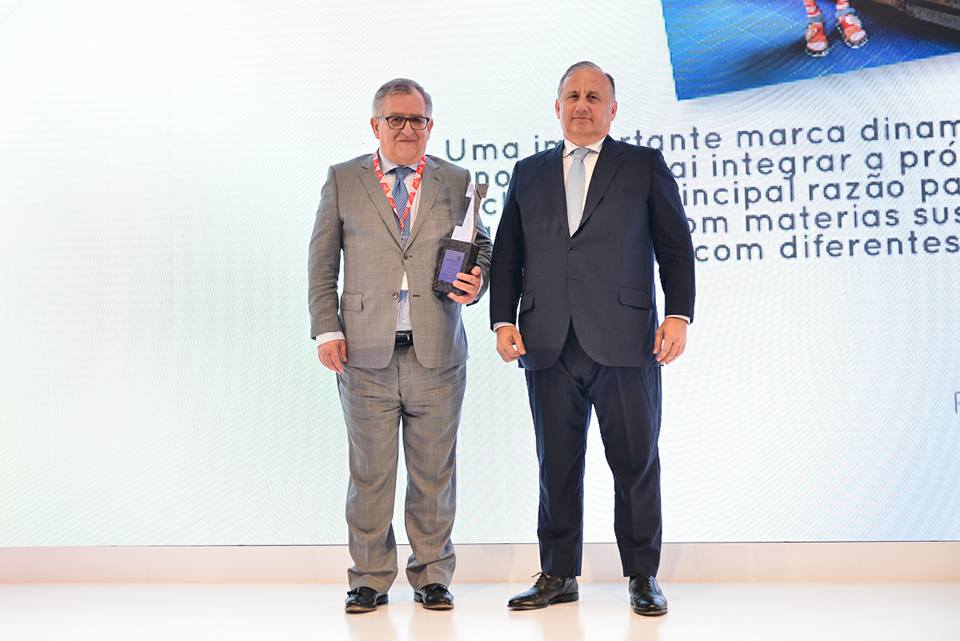
Tenowa, a marca de tecidos sustentáveis e ecológicos da Riopele, é a grande vencedora do Prémio Produto Inovação 2018 atribuído pela COTEC Portugal. O galardão foi entregue a José Alexandre Oliveira, Presidente do Conselho de Administração da Riopele, esta terça-feira, em Évora, no 15º Encontro Nacional da Associação Empresarial para a Inovação.
Tenowa é uma inovadora marca de tecidos concebidos através da valorização de resíduos têxteis e agroalimentares, com design atrativo e elevada qualidade e conforto. Este produto utiliza 80% de matéria-prima reciclada e é feito com recurso a equipamentos têxteis tecnologicamente avançados, com um elevado nível de automação e que substituem o olho humano, visando identificar defeitos nos tecidos fabricados.
A marca é o resultado do projeto R4Textiles, desenvolvido pela empresa famalicense com a colaboração do CITEVE – Centro Tecnológico das Indústria Têxtil e do Vestuário e do CeNTI – Centro de Nanotecnologia e Materiais Técnicos, Funcionais e Inteligentes, igualmente sediados em Vila Nova de Famalicão, e da Escola Superior de Biotecnologia do Porto.
Ao Prémio Produto Inovação 2018 estavam nomeados sete projetos finalistas, dois dos quais de empresas de Vila Nova de Famalicão: a Riopele, com a Tenowa, e TMG Automotive, com o Artificial Leather Cork.
We and our [number_of_vendors] partners use cookies and other tracking technologies to store and access information on your device and to process your personal data.
With your consent, we and our partners may process personal data such as unique identifiers, browsing data, and precise geolocation data, including through device scanning. You can accept or reject all by clicking the buttons below, or customize your choices by clicking "Manage Settings".
Some of our partners process your data based on their legitimate interest. You have the right to object to this processing. You can manage these settings by clicking "Manage Settings" and reviewing the legitimate interest options for each purpose and vendor.
This consent applies to this website only. You can withdraw or change your consent at any time by clicking the floating "Cookie Preferences" button at the bottom-left corner of your screen.
Data Processing Purposes: Store and/or access information on a device (397 seeking consent); Use limited data to select advertising (278 seeking consent, 96 using legitimate interest); Create profiles for personalised advertising (294 seeking consent); Use profiles to select personalised advertising (300 seeking consent); Create profiles to personalise content (114 seeking consent); Use profiles to select personalised content (107 seeking consent); Measure advertising performance (300 seeking consent, 132 using legitimate interest); Measure content performance (138 seeking consent, 56 using legitimate interest); Understand audiences through statistics or combinations of data from different sources (198 seeking consent, 67 using legitimate interest); Develop and improve services (200 seeking consent, 107 using legitimate interest); Use limited data to select content (62 seeking consent, 22 using legitimate interest)
Special Features: Use precise geolocation data; Identify devices based on information actively requested
Review and customize your consent choices for purposes and vendors. You can grant or withdraw consent for each purpose and vendor individually, or use the buttons below to accept or reject all.
The choices you make regarding the purposes and entities listed in this notice are saved in your browser's localStorage and a cookie named "wpconsent_tcstring" for a maximum duration of 12 months.
Non-IAB TCF Categories
These categories are not part of the IAB Transparency & Consent Framework.
Essential cookies enable basic functions and are necessary for the proper function of the website.
Name
Description
Duration
IAB TC String
This cookie stores the IAB Transparency & Consent Framework consent string, recording the user's choices for IAB TCF purposes and vendors.
12 months
Cookie Preferences
This cookie is used to store the user's cookie consent preferences.
30 days
IAB TCF Purposes
These purposes are part of the IAB Transparency & Consent Framework.
Store and/or access information on a device (397 seeking consent)
Cookies, device or similar online identifiers (e.g. login-based identifiers, randomly assigned identifiers, network based identifiers) together with other information (e.g. browser type and information, language, screen size, supported technologies etc.) can be stored or read on your device to recognise it each time it connects to an app or to a website, for one or several of the purposes presented here.
Examples:
Most purposes explained in this notice rely on the storage or accessing of information from your device when you use an app or visit a website. For example, a vendor or publisher might need to store a cookie on your device during your first visit on a website, to be able to recognise your device during your next visits (by accessing this cookie each time).
Use limited data to select advertising (278 seeking consent, 96 using legitimate interest)
Advertising presented to you on this service can be based on limited data, such as the website or app you are using, your non-precise location, your device type or which content you are (or have been) interacting with (for example, to limit the number of times an ad is presented to you).
Examples:
A car manufacturer wants to promote its electric vehicles to environmentally conscious users living in the city after office hours. The advertising is presented on a page with related content (such as an article on climate change actions) after 6:30 p.m. to users whose non-precise location suggests that they are in an urban zone.
A large producer of watercolour paints wants to carry out an online advertising campaign for its latest watercolour range, diversifying its audience to reach as many amateur and professional artists as possible and avoiding showing the ad next to mismatched content (for instance, articles about how to paint your house). The number of times that the ad has been presented to you is detected and limited, to avoid presenting it too often.
Create profiles for personalised advertising (294 seeking consent)
Information about your activity on this service (such as forms you submit, content you look at) can be stored and combined with other information about you (for example, information from your previous activity on this service and other websites or apps) or similar users. This is then used to build or improve a profile about you (that might include possible interests and personal aspects). Your profile can be used (also later) to present advertising that appears more relevant based on your possible interests by this and other entities.
Examples:
If you read several articles about the best bike accessories to buy, this information could be used to create a profile about your interest in bike accessories. Such a profile may be used or improved later on, on the same or a different website or app to present you with advertising for a particular bike accessory brand. If you also look at a configurator for a vehicle on a luxury car manufacturer website, this information could be combined with your interest in bikes to refine your profile and make an assumption that you are interested in luxury cycling gear.
An apparel company wishes to promote its new line of high-end baby clothes. It gets in touch with an agency that has a network of clients with high income customers (such as high-end supermarkets) and asks the agency to create profiles of young parents or couples who can be assumed to be wealthy and to have a new child, so that these can later be used to present advertising within partner apps based on those profiles.
Use profiles to select personalised advertising (300 seeking consent)
Advertising presented to you on this service can be based on your advertising profiles, which can reflect your activity on this service or other websites or apps (like the forms you submit, content you look at), possible interests and personal aspects.
Examples:
An online retailer wants to advertise a limited sale on running shoes. It wants to target advertising to users who previously looked at running shoes on its mobile app. Tracking technologies might be used to recognise that you have previously used the mobile app to consult running shoes, in order to present you with the corresponding advertisement on the app.
A profile created for personalised advertising in relation to a person having searched for bike accessories on a website can be used to present the relevant advertisement for bike accessories on a mobile app of another organisation.
Create profiles to personalise content (114 seeking consent)
Information about your activity on this service (for instance, forms you submit, non-advertising content you look at) can be stored and combined with other information about you (such as your previous activity on this service or other websites or apps) or similar users. This is then used to build or improve a profile about you (which might for example include possible interests and personal aspects). Your profile can be used (also later) to present content that appears more relevant based on your possible interests, such as by adapting the order in which content is shown to you, so that it is even easier for you to find content that matches your interests.
Examples:
You read several articles on how to build a treehouse on a social media platform. This information might be added to a profile to mark your interest in content related to outdoors as well as do-it-yourself guides (with the objective of allowing the personalisation of content, so that for example you are presented with more blog posts and articles on treehouses and wood cabins in the future).
You have viewed three videos on space exploration across different TV apps. An unrelated news platform with which you have had no contact builds a profile based on that viewing behaviour, marking space exploration as a topic of possible interest for other videos.
Use profiles to select personalised content (107 seeking consent)
Content presented to you on this service can be based on your content personalisation profiles, which can reflect your activity on this or other services (for instance, the forms you submit, content you look at), possible interests and personal aspects. This can for example be used to adapt the order in which content is shown to you, so that it is even easier for you to find (non-advertising) content that matches your interests.
Examples:
You read articles on vegetarian food on a social media platform and then use the cooking app of an unrelated company. The profile built about you on the social media platform will be used to present you vegetarian recipes on the welcome screen of the cooking app.
You have viewed three videos about rowing across different websites. An unrelated video sharing platform will recommend five other videos on rowing that may be of interest to you when you use your TV app, based on a profile built about you when you visited those different websites to watch online videos.
Measure advertising performance (300 seeking consent, 132 using legitimate interest)
Information regarding which advertising is presented to you and how you interact with it can be used to determine how well an advert has worked for you or other users and whether the goals of the advertising were reached. For instance, whether you saw an ad, whether you clicked on it, whether it led you to buy a product or visit a website, etc. This is very helpful to understand the relevance of advertising campaigns.
Examples:
You have clicked on an advertisement about a “black Friday” discount by an online shop on the website of a publisher and purchased a product. Your click will be linked to this purchase. Your interaction and that of other users will be measured to know how many clicks on the ad led to a purchase.
You are one of very few to have clicked on an advertisement about an “international appreciation day” discount by an online gift shop within the app of a publisher. The publisher wants to have reports to understand how often a specific ad placement within the app, and notably the “international appreciation day” ad, has been viewed or clicked by you and other users, in order to help the publisher and its partners (such as agencies) optimise ad placements.
Measure content performance (138 seeking consent, 56 using legitimate interest)
Information regarding which content is presented to you and how you interact with it can be used to determine whether the (non-advertising) content e.g. reached its intended audience and matched your interests. For instance, whether you read an article, watch a video, listen to a podcast or look at a product description, how long you spent on this service and the web pages you visit etc. This is very helpful to understand the relevance of (non-advertising) content that is shown to you.
Examples:
You have read a blog post about hiking on a mobile app of a publisher and followed a link to a recommended and related post. Your interactions will be recorded as showing that the initial hiking post was useful to you and that it was successful in interesting you in the related post. This will be measured to know whether to produce more posts on hiking in the future and where to place them on the home screen of the mobile app.
You were presented a video on fashion trends, but you and several other users stopped watching after 30 seconds. This information is then used to evaluate the right length of future videos on fashion trends.
Understand audiences through statistics or combinations of data from different sources (198 seeking consent, 67 using legitimate interest)
Reports can be generated based on the combination of data sets (like user profiles, statistics, market research, analytics data) regarding your interactions and those of other users with advertising or (non-advertising) content to identify common characteristics (for instance, to determine which target audiences are more receptive to an ad campaign or to certain contents).
Examples:
The owner of an online bookstore wants commercial reporting showing the proportion of visitors who consulted and left its site without buying, or consulted and bought the last celebrity autobiography of the month, as well as the average age and the male/female distribution of each category. Data relating to your navigation on its site and to your personal characteristics is then used and combined with other such data to produce these statistics.
An advertiser wants to better understand the type of audience interacting with its adverts. It calls upon a research institute to compare the characteristics of users who interacted with the ad with typical attributes of users of similar platforms, across different devices. This comparison reveals to the advertiser that its ad audience is mainly accessing the adverts through mobile devices and is likely in the 45-60 age range.
Develop and improve services (200 seeking consent, 107 using legitimate interest)
Information about your activity on this service, such as your interaction with ads or content, can be very helpful to improve products and services and to build new products and services based on user interactions, the type of audience, etc. This specific purpose does not include the development or improvement of user profiles and identifiers.
Examples:
A technology platform working with a social media provider notices a growth in mobile app users, and sees based on their profiles that many of them are connecting through mobile connections. It uses a new technology to deliver ads that are formatted for mobile devices and that are low-bandwidth, to improve their performance.
An advertiser is looking for a way to display ads on a new type of consumer device. It collects information regarding the way users interact with this new kind of device to determine whether it can build a new mechanism for displaying advertising on this type of device.
Use limited data to select content (62 seeking consent, 22 using legitimate interest)
Content presented to you on this service can be based on limited data, such as the website or app you are using, your non-precise location, your device type, or which content you are (or have been) interacting with (for example, to limit the number of times a video or an article is presented to you).
Examples:
A travel magazine has published an article on its website about the new online courses proposed by a language school, to improve travelling experiences abroad. The school’s blog posts are inserted directly at the bottom of the page, and selected on the basis of your non-precise location (for instance, blog posts explaining the course curriculum for different languages than the language of the country you are situated in).
A sports news mobile app has started a new section of articles covering the most recent football games. Each article includes videos hosted by a separate streaming platform showcasing the highlights of each match. If you fast-forward a video, this information may be used to select a shorter video to play next.






 Tenowa é uma inovadora marca de tecidos concebidos através da valorização de resíduos têxteis e agroalimentares, com design atrativo e elevada qualidade e conforto. Este produto utiliza 80% de matéria-prima reciclada e é feito com recurso a equipamentos têxteis tecnologicamente avançados, com um elevado nível de automação e que substituem o olho humano, visando identificar defeitos nos tecidos fabricados.